
New intrusion detection systems boost protection of SCADA systems against cyber threats
An international reserch team developed two deep learning-based IDS models to enhance cybersecurity in SCADA systems. The hybrid approach reportedly improves detection of complex and novel cyber threats with high accuracy, adaptability, and efficiency, outperforming traditional methods across multiple datasets.
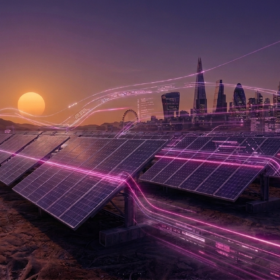
UK defining stronger energy cybersecurity rules after Poland attack
The UK government is proposing stronger cybersecurity rules for electricity and gas sectors, prompted by recent attacks on European energy infrastructure, including a recent incident involving solar power plants in Poland. The plans would extend baseline cybersecurity requirements to all licensed energy organizations and could also adjust compliance thresholds under NIS regulations.
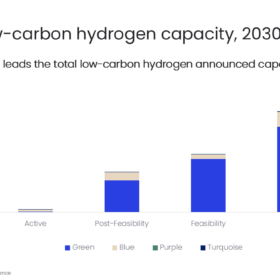
The Hydrogen Stream: Capacity outlook grows, deals shift
GlobalData says hydrogen capacity could reach 82.3 million metric tons per annum (mtpa) by 2030, while Topsoe has ended supply agreements with First Ammonia.
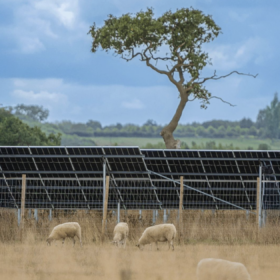
UK’s first community-owned solar battery seeks investors
Low Carbon Hub plans to add battery energy storage system (BESS) to existing solar plant. The developer is offering shares in what’s thought to be the first community-owned co-located battery in the United Kingdom.
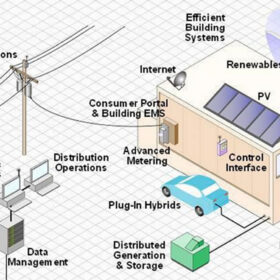
Industry 4.0 technologies raise cyber risks for smart renewables grids
An international research team developed a multi-stage intrusion detection system that uses supervised and unsupervised AI techniques to detect and mitigate cyber threats in smart renewable energy grids. The system can reportedly achieve high accuracy, low false positives, and real-time detection, outperforming traditional intrusion detection system models.
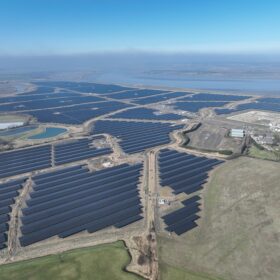
UK solar deployment hits 22 GW as more large projects commissioned
Government data reveals 2.5 GW of new solar added in 12-months period, the fastest pace for a decade. Deployment expected to accelerate as pipeline of utility-scale projects grows and subsidy support for residential installations kicks in.

How many solar projects have been backed by the UK government?
Clean energy projects data reveals projects that have secured some kind of government backing since the last general election in July 2024. The largest projects are backed through contracts-for-difference allocation rounds, while rooftop support has been ramping up on schools and hospitals.

Perovskite solar cells can be made without expensive cleanrooms
Swansea University researchers found that perovskite solar cells can tolerate dusty fabrication environments, performing almost as well as those made in cleanrooms. The findings suggest low-cost, scalable production may be possible without ultra-sterile conditions, potentially accelerating cell and module manufacturing.
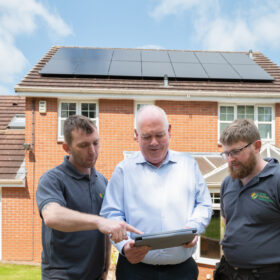
Solar panels and low-carbon heating mandated for new homes in England
Heat pumps and solar PV effectively mandated under new building regulations for England. UK government says it is stepping up push for clean power in response to Iran war. Major UK retailers expected to have first plug-in solar devices on shelves within months.
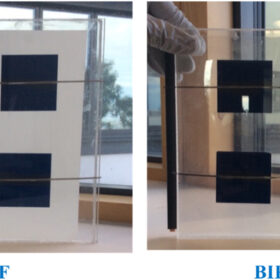
New solar window concept integrates polymer-dispersed liquid crystal to enable switchable transparency
Researchers in the United Kingdom have developed a smart window that combines switchable polymer-dispersed liquid crystal with integrated PV cells, offering controllable transparency and electricity generation. The system balances light, heat, and solar protection while maintaining high visual quality and stable performance, according to its creators.
