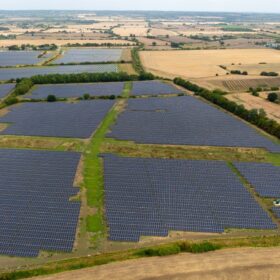
UK solar developer secures $1.1 billion financing package
Enviromena announces a £825 million ($1.1 billion) senior portfolio financing package, providing immediate capital to support the buildout of a 1 GW pipeline. The credit facility was underwritten by a group of institutional investors.
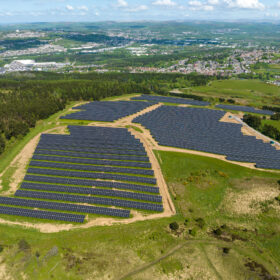
UK solar generation hits record 15 GW as gas falls to historic low
Solar set a new generation record on Great Britain’s electricity grid during a week that also saw zero-carbon supply reach an all-time high. The new records come as the grid operator expands demand-side flexibility markets in anticipation of lower summer demand driven by strong solar irradiance.

How to operate PV-driven residential heat pumps under time-varying tariffs
Researchers in the United Kingdom developed a scheduling model for residential heat pumps that reduces electricity costs while maintaining thermal comfort under dynamic tariffs and uncertain rooftop PV generation. It optimizes when to use grid power, PV energy, and building thermal storage.
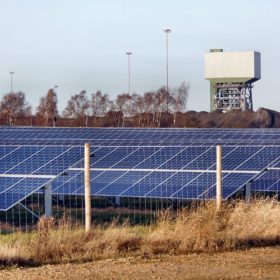
UK tries to break gas link with voluntary long-term fixed price contracts for all renewables
UK solar plants without fixed-price contracts will be offered voluntary long-term fixed-price agreements under a new “Wholesale Contracts for Difference” regime from 2026. The policy seeks to reduce exposure to volatile wholesale prices driven by gas.

Fabricating perovskite solar cells with robotic boxes
An international research team has developed an AI-driven robotic platform that autonomously designs, fabricates, and optimizes perovskite solar cells, completing the full experimental workflow in a closed-loop system. Using the platform, the researchers fabricated and tested more than 50,000 devices, achieving efficiencies of up to 27%.

The Hydrogen Stream: Levelized cost of hydrogen at Mediterranean ports can be as low as €2.5/kg for hybrid systems
A study from the University of Naples Federico II finds hydrogen production at Mediterranean ports could cost €5.7–8.6/kg using only renewables and €2.5–13/kg in hybrid systems, with solar emerging as the most reliable resource and wind outperforming it in select locations. Alongside these findings, major industry developments include new hydrogen and e-fuel projects, advanced electrolyser technologies, and EU-backed infrastructure expansion supporting large-scale decarbonization.

Thermostatic radiator valves can reduce energy consumption in air-source heat pumps by 6-8%
Researchers in the United Kingdom found that thermostatic radiator valves can reduce air-source heat pump space heating energy use by 6–8% without affecting system efficiency when used correctly. TRVs must be applied carefully in well-designed, balanced systems with at least one open flow path, as they mainly serve as a secondary tool for room-level comfort control rather than a replacement for proper heat pump design and low flow temperature operation.

RWE drops 99.9 MW solar project in Wales on grid constraints
RWE has scrapped its 99.9 MW Butterfly solar‑plus‑storage project in Wales after determining that grid connection availability made it unviable, in a move that comes amid sharply rising connection demand and mounting pressure on the United Kingdom’s queue reform process.
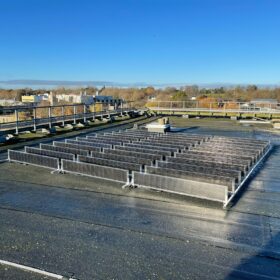
Vertical bifacial PV outperforms tilted PV systems in the UK
A year-long study in the UK finds vertical bifacial PV systems achieve an up to 26.91% higher output during morning hours compared to traditional tilted PV systems. The vertical bifacial system bettered the tilted system across all four seasons, with average power gains as high as 24.52% during winter.
Household solar is easier said than installed
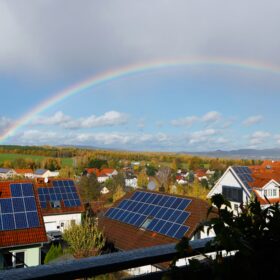
Analysis of longitudinal survey data has explored the link between intended and actual solar panel adoption in UK households. It finds that while most households that had intention of installing solar in 2012-13 were yet to do so by 2021-22, serious intention to install solar still increases the likelihood of adoption more than other factors such as income and environmental perceptions.
