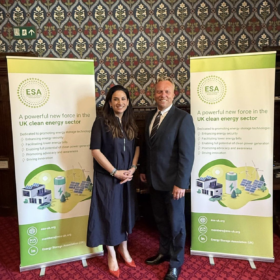
UK needs to get “obsessed” with energy storage, says ESA founder
Energy Storage Association (ESA) founder Jason Howlett tells ESS News learning lessons from other markets can ensure Great Britain avoids levels of negative pricing seen in elsewhere, as pace of UK renewables deployment is poised to ramp up.
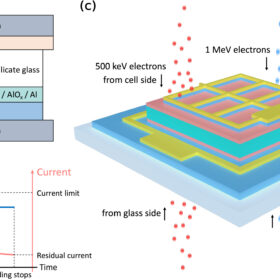
Gallium arsenide solar cells radiation-resilient for space applications
A group led by Cambridge University has developed an adhesive-free method of bonding ultra-thin gallium arsenide solar cells to borosilicate glass. The proposed technique is reportedly compatible with standard planar device processing.

UK parliament calls for solar supply chain law, forced labor import ban
Cross-party human rights committee says legislation needed to combat forced labor in solar supply chains, in report urging the UK government to introduce mandatory due diligence measures. Solar Energy UK expresses disappointment in committee’s portrayal of the UK solar industry.

UK government extends CfD contract length to 20 years
Changes announced ahead of seventh Contract for Difference (CfD) allocation round widely viewed as key to achieving government’s clean power targets for 2030. Target commissioning window for solar projects also extended in anticipation of larger capacity projects.
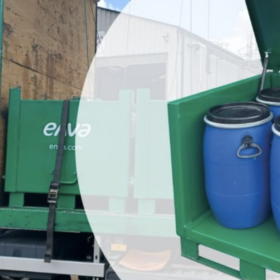
Enva unveils certified battery safe box to combat lithium battery fire risks
New fire-resistant container aims to enhance the safe transport of waste lithium-ion batteries across the United Kingdom and Ireland.

Superdielectrics unveils Faraday 2 battery as a polymer-based alternative to Li-ion
Superdielectrics launches the Faraday 2 battery, advancing a water-based, metal-free approach to home storage, from a UK-based facility.

UK researchers developing new type of cadmium telluride PV panels for space applications
A team of UK researchers is working on lightweight cadmium telluride (CdTe) solar devices for space arrays. The aim is to develop 20%-efficient ultra-thin devices to provide lightweight, compact, lower cost solar power for satellites and space-based manufacturing applications.
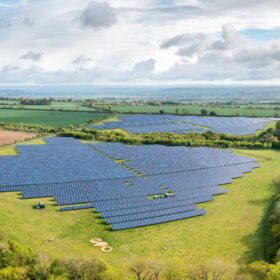
UK developer secures $471 million financing for 536 MW-146 MWh solar, BESS portfolio
British Solar Renewables reached financial close on 12-project solar portfolio with three co-located battery energy storage system (BESS) assets. The GBP 345 million financial package covers 536 MW of PV capacity and 146 MWh of BESS.
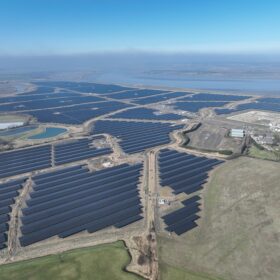
Largest UK solar plant goes online
The 373 MW Cleve Hill Solar Park is now exporting 100% of its capacity to the grid. Under construction, co-located energy storage to come online at a later date. The project has broken UK records for financing and offtake agreements, according to developer Quinbrook.
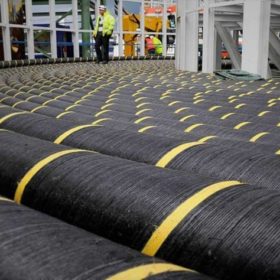
UK rejects CfD bid for 10.5 GW Morocco solar-wind subsea cable
The UK government has rejected a contract-for-difference (CfD) application for the proposed Xlinks interconnector, a 3,800 km submarine cable to deliver power from a planned 10.5 GW solar-wind facility in Morocco to the UK grid.
