




From ESS News
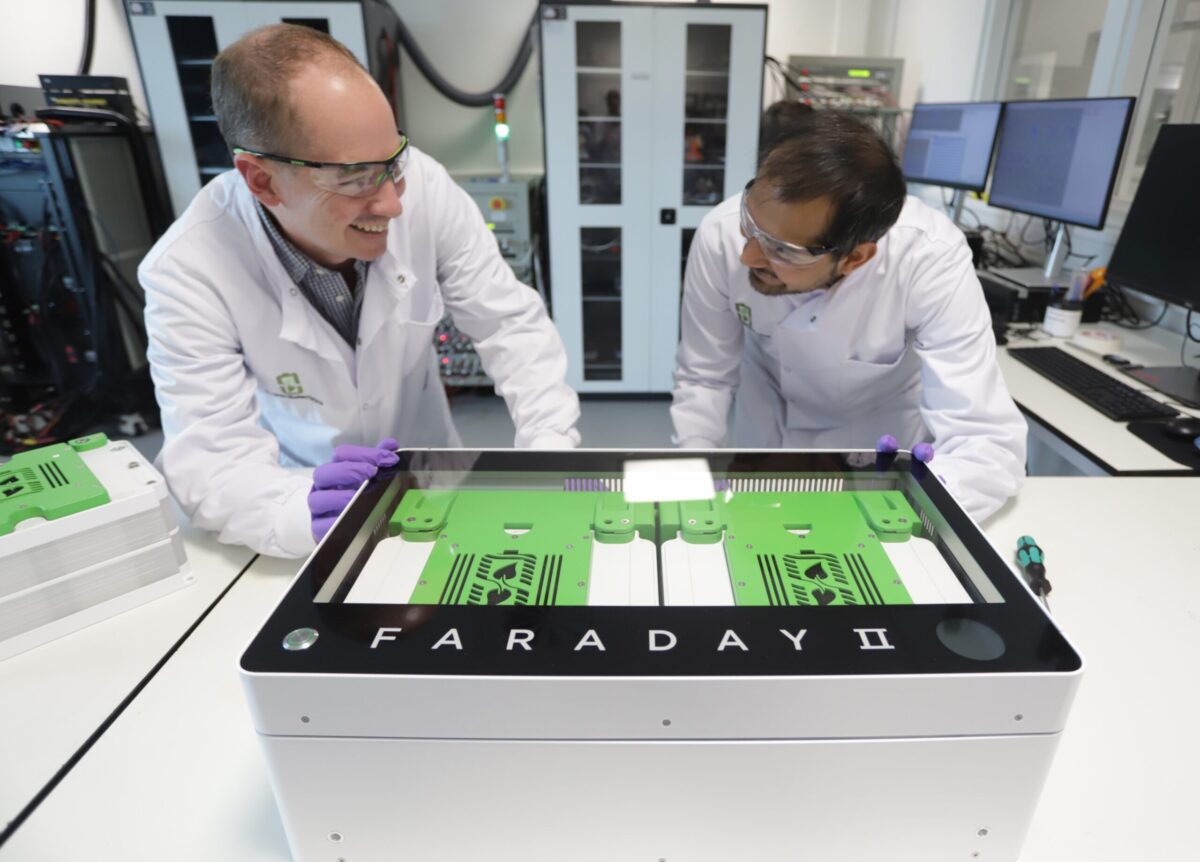
UK-based Superdielectrics has launched the second-generation version of its polymer battery, the Faraday 2, aimed squarely at residential energy storage. The system is designed as a home-scale alternative to lithium-ion battery energy storage, offering what the company describes as a safer and more sustainable solution using water-based, contact-lens-derived polymers. These materials avoid the use of rare earth or critical metals, instead relying on non-toxic components intended to lower cost and reduce fire risk.
The Faraday 2 builds on the earlier Faraday 1 prototype, introduced last year, and continues the company’s development of aqueous, contact-lens-derived polymer membranes.
While technical specifications remain limited, Superdielectrics says another key benefit is that the Faraday 2 can fully charge in around 30 minutes and may exceed the lifecycle of existing battery chemistries. It is said to outperform lead-acid batteries in energy density and is targeting future parity or improvement over lithium-ion. However, no detailed figures on energy or power density, efficiency, or degradation have been released.
To continue reading, please visit our ESS News website.
This content is protected by copyright and may not be reused. If you want to cooperate with us and would like to reuse some of our content, please contact: editors@pv-magazine.com.


By submitting this form you agree to pv magazine using your data for the purposes of publishing your comment.
Your personal data will only be disclosed or otherwise transmitted to third parties for the purposes of spam filtering or if this is necessary for technical maintenance of the website. Any other transfer to third parties will not take place unless this is justified on the basis of applicable data protection regulations or if pv magazine is legally obliged to do so.
You may revoke this consent at any time with effect for the future, in which case your personal data will be deleted immediately. Otherwise, your data will be deleted if pv magazine has processed your request or the purpose of data storage is fulfilled.
Further information on data privacy can be found in our Data Protection Policy.