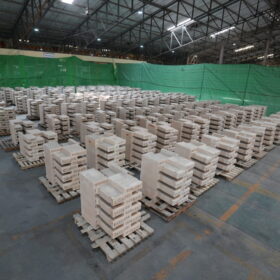
Rondo announces 90 GWh heat battery factory
U.S.-based Rondo Energy will operate the world’s largest battery factory in Thailand, two and a half times the size of Tesla’s Gigafactory.
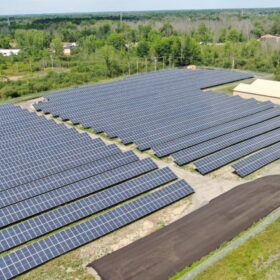
US researchers identify rising number of solar siting restrictions
Columbia University researchers have identified 59 new renewable energy siting restrictions across 35 US states, taking the total to 228. They noted that nine state-level restrictions are severe enough to block projects.
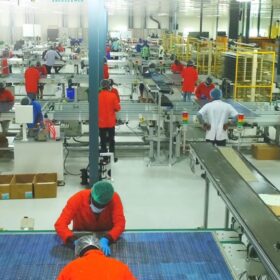
Vikram Solar announces $1.5 billion vertically integrated factory in the U.S.
Vikram’s new joint venture will build a 4 GW solar module production facility in Brighton, Colorado, followed by a wafer and ingot facility in a Southern State.

Lunar Energy announces new residential energy storage system
US-based Lunar Energy offers batteries, hybrid inverters, and shutdown devices.
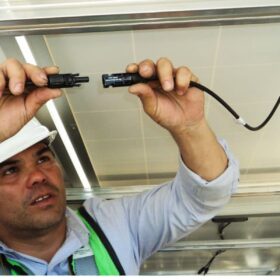
Main causes of solar performance issues
A new report by HelioVolta shows that 62% of inspected PV projects have critical or major issues.

Solar-plus-storage microgrids minimize power shutoffs during wildfires
Lawrence Berkeley National Laboratory researchers have shown that microgrids equipped with solar-plus-storage systems can maintain an average levelized cost of energy (LCOE) below $0.30/kWh and limit annual public safety power shutoffs to 2% to 3% of annual energy demand.
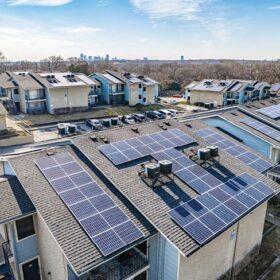
Virtual power plants roll out across the U.S.
Virtual power plants (VPPs) coordinate distributed resources and demand for a more resilient, cost-effective energy transition. And they are gaining traction in the United States.

Solar awning for recreational vehicles
Eco-dynamic Tech’s 1,000 W solar awnings for recreational vehicles (RVs) feature flexible heterojunction solar cells and can be customized with a range of color patterns.

Canadian Solar announces 5 GW US module factory
Representing an investment of $250 million, the facility is expected to bring 1,500 jobs.
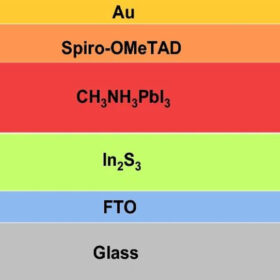
Perovskite solar cell based on indium sulfide ETL promises 20.15% efficiency
An international team has sought to use indium sulfide as an electron transport material in a perovskite solar cell. The result is a device with lower defect density and improved performance.
