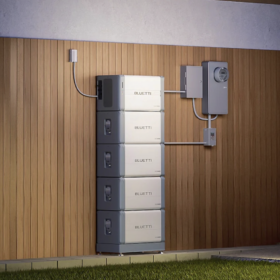
Bluetti launches EnergyPro 13K home storage system in US
Chinese battery manufacturer Bluetti has launched its next-generation whole-home battery backup system in the United States, introducing the EnergyPro 13K Energy Storage System (EP13K).
Inverter-based resource performance history leads to US regulatory change
Three new NERC standards — PRC-028, 029 and 030 — are designed to improve grid reliability
Agrivoltaics 101: How solar and agriculture can thrive on the same land
Land scarcity does not necessarily have to limit ground-mounted PV deployment. With clever design tailored to each unique site, agrivoltaics can thrive and turn Europe’s scarce agricultural land into dual use land that hosts clean energy production for communities. Find out how in this pv magazine Webinar.
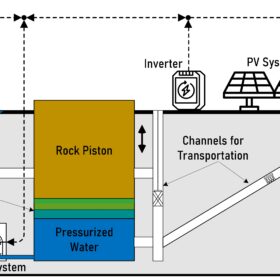
PV-driven hydraulic hydro storage may hit $0.022/kWh LCOE in the U.S.
An international study has demonstrated that utility-scale solar PV paired with hydraulic hydro storage (HHS) could reach an LCOE as low as $0.022/kWh in select U.S. regions. The system could provide GWh-scale, cost-competitive, and highly reliable long-duration storage, capable of powering large commercial districts with minimal environmental impact.
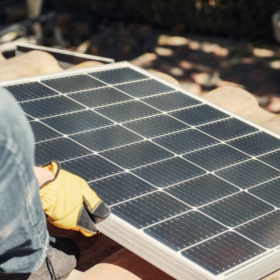
Colorado House passes legislation to legalize plug-in solar for renters
The Colorado House of Representatives has passed a bill to legalize plug-in solar systems for renters and multifamily residents, establishing a regulatory framework for portable arrays that connect directly to standard home outlets.
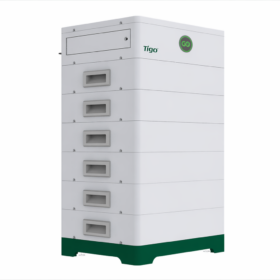
Tigo releases modular battery for residential PV
The US manufacturer has launched a modular residential battery for Europe, scalable from 7.3 kWh to 47.9 kWh with LFP chemistry and IP65 protection. The system offers up to 23.3 kW nominal power, over 6,000 cycles, and a depth of discharge of 90%.

US solar module prices face upward pressure
Median solar module pricing in the United States reached $0.28 per watt as the market adjusted to intensified trade enforcement and new Foreign Entity of Concern compliance requirements, according to the Q1 2026 Quarterly Pricing & Domestic Content Report from Anza.
Electrification alone may not shield firms from gas-linked prices
With electricity markets still tied to natural gas in many regions, battery storage is emerging as a tool to manage price volatility and reduce exposure to grid-driven risks.

Terabase Energy advances automated PV construction with robotics, AI tools
California-based Terabase Energy is scaling up its automated solar construction platform and expanding its engineering software ecosystem to improve project delivery and performance modeling.
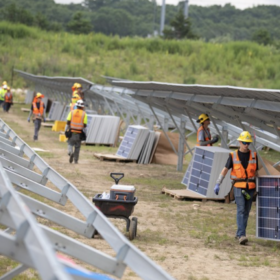
US solar faces 53,000-worker gap ahead of 2026 deadline
The US solar industry may fall short of workforce needs as developers race to meet July 4, 2026 construction deadlines tied to federal tax credits.
