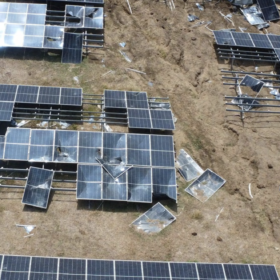
Field-tested hurricane survival strategies for solar
Rocky Mountain Institute (RMI) has published “Solar Under Storm III,” analyzing hurricane impacts on solar farms in the Caribbean after Hurricane Beryl and identifying key failure modes and risk-mitigation measures.
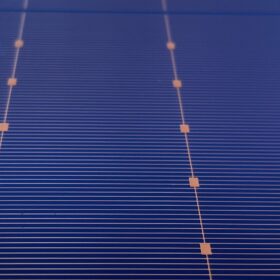
Key PV innovations often originated outside solar sector
Research from the Massachusetts Institute of Technology highlights 81 unique innovations across a diverse range of research efforts and industries that have impacted PV system costs since 1970, the majority of which originate from outside the sector.
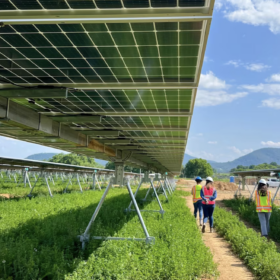
Vertical integration in solar? Harder than it looks
While owning customer relationships and generating assets is enticing, it’s not as straightforward as it might seem, according to Zoë Gamble of CleanChoice Energy.

Abandoned US nuclear site to host 16,000 MT polysilicon plant
Highland Materials will build a 16,000 metric ton (MT) solar-grade polysilicon plant on a former US nuclear project site, under a long-term lease with Pivotal Manufacturing.
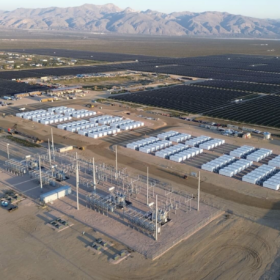
California activates $2 billion solar and energy storage facility
Arevon Energy has completed the $2 billion, two-phase Eland solar-plus-storage project in Kern County, California, which will supply about 7% of Los Angeles’s electricity demand.
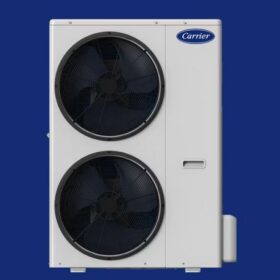
Carrier launches new heat pump for residential, light commercial use
Carrier, a US-based heating solutions provider, has introduced a new heat pump system featuring a cooling seasonal energy efficiency rating (SEER2) of up to 29.7 and a heating seasonal performance factor (HSPF2) of up to 12.2.

The Hydrogen Stream: EIA sees mostly gray hydrogen in US by 2050
The US Energy Information Administration (EIA) says US hydrogen production will increase about 80% by 2050, mainly from natural gas with minimal electrolyzer use, while key industry players advance large-scale green hydrogen projects and expand hydrogen vehicle support across global markets.

US opens next round of solar import probes targeting India, Indonesia, Laos
The US Department of Commerce has initiated full investigations into anti-dumping and anti-subsidy cases against solar imports from India, Indonesia, and Laos filed in July. These investigations, conducted alongside the US International Trade Commission (ITC), are expected to continue into next spring.

California high court orders review of rooftop solar incentive cuts
The California Supreme Court has ordered the state appeals court to reexamine its decision to defer to the California Public Utilities Commission (CPUC) over a controversial cut to rooftop solar incentives. The net energy metering 3.0 ruling led to a crash in California’s once-thriving rooftop solar market and put clean energy procurement goals in jeopardy.

Researchers highlight importance of site-specific agrivoltaics design
A research team from Temple University in Philadelphia analyzed the synergies and trade-offs of land conversion to agrivoltaics and other multi-use solar energy landscapes globally. They found that co-located solar systems should be specifically tailored in order to offer optimal performance and minimize negative impacts.
