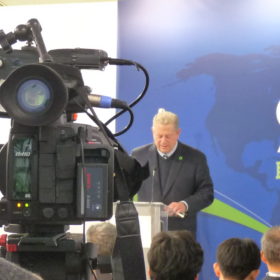
Could Covid-19 be the catalyst for change where the COP process has stalled?
While the world’s climate negotiators dither, the post Covid-19 world could see their efforts overtaken – but only if policymakers are bold enough to take the opportunity to offer truly green fiscal stimulus packages to get us through the crisis. Felicia Jackson, from the center for sustainable finance of the School of Oriental and African Studies at the University of London, gives her thoughts here.

Covid-19: IHS Markit expects demand for private and commercial storage to fall significantly
A slump in demand would weigh more heavily on the storage industry than a temporary production shutdown and IHS Markit analysts say that is where the risk lies, rather than with a temporary shortage of battery cells. A similar prediction has been made for the PV market.
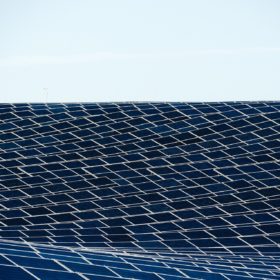
A dual-angle approach to building solar plants at higher latitudes
A research team in the US has proposed a ‘dual-angle solar harvesting’ method it is claimed could help PV developers optimize energy yield and land use. It is claimed the method would be particularly suitable for projects in cloudier climates and at higher latitudes.

New York allocates 1 GW of solar as renewables auction delivers $18.59/MWh average price
The results of New York Statevs most recent renewable energy request for proposals are in. Some 21 large scale clean energy projects with 1,278 MW of new capacity have been awarded, with 17 of the projects supplying 1,090 MW of solar.

Can a transparent solar window harvest enough power to be economical?
Can an organic solar cell material finally be commercialized? Last year, Ubiquitous Energy claimed a world record for efficiency of a “transparent solar cell” with a “certified” 9.8% efficiency.
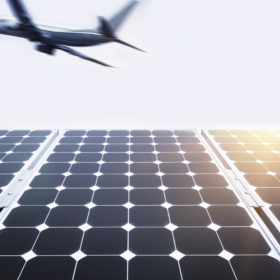
The sky’s the limit: How solar and storage can set a post-Covid-19 example
The airline industry has been among the hardest hit by the Covid-19 pandemic; carriers are in ‘freefall’ as Glen Peters, research director at the Center for International Climate and Environment Research in Oslo recently wrote, with governments mulling stimulus packages for airline bailouts. How we react to the coronavirus outbreak is crucial for society as a whole and the solar and energy storage industries can lead the charge in rewriting the status quo.

Panasonic suspends work at Tesla’s Nevada fab as carmaker’s California and New York gigafactories pause
Tesla’s Nevada operation is still open for business, though. The EV and battery maker has assured the market its cash position is strong enough to weather an “extended period of uncertainty”.

More efficient underwater PV cells with wide-band gap semiconductors
U.S. researchers have conducted detailed balance calculations to show the ultimate potential of underwater solar cells. According to their findings, the devices could theoretically produce useful power at up to 65% efficiency in clear waters. However, this would only be possible by using wide-band-gap semiconductors, which have not been considered for solar cells used for land-based applications because their band gaps are too large.
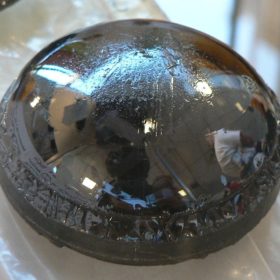
Enhancing the silicon carbide supply chain
GlobalWafers, a Taiwanese wafer manufacturer, will add 150mm silicon carbide to its products, manufactured from bulk SiC crystals produced by GT Advanced Technologies, under a new multi-year agreement to “forge a new source of supply of silicon carbide wafers.”
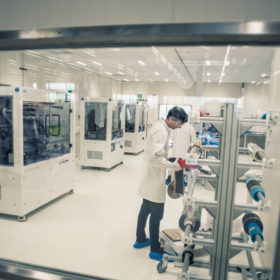
Four challenges to solid-state battery scale-up
A paper by scientists at the University of California San Diego has outlined a technology roadmap for the development of solid-state batteries – and four challenges to address for the technology to advance.
