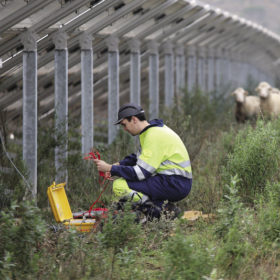
Enel leaps up solar developer global ranking after project spree
The Italian fossil fuel company is not hanging around when it comes to diversifying into PV, with almost 1.5 GW of generation capacity plugged in since the start of last year. Canadian Solar has disputed Wiki-Solar’s positioning of First Solar as the world’s biggest PV developer.
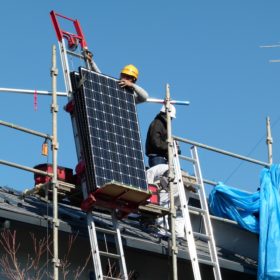
Commercial rooftops will lead renewables growth in the next five years
Although the International Energy Agency’s latest renewables report forecasts impressive solar growth there is still a nagging feeling it has produced conservative estimates and the emphasis on sharing costs with grid operators is predictable.

US scientists create first rechargeable lithium-carbon dioxide battery
Researchers in Chicago have developed a world first fully rechargeable lithium-carbon dioxide battery, an achievement they claim could pave the way for the use of the greenhouse gas in advanced energy storage systems.
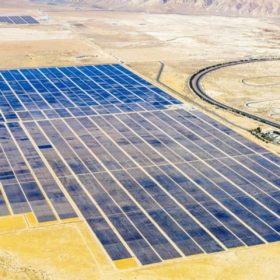
8minute, Capital Dynamics complete massive Springbok PV project in California
The 121 MWdc Springbok 3 project in Kern County, California, brings the Springbok series to 448 MW, as Capital Dynamics continues its investments in U.S. solar.
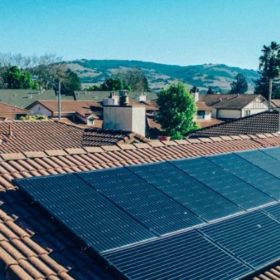
Solar + storage to survive disasters
Roth Capital Partners expects the U.S. residential storage market to grow more quickly than expected. The prediction is founded just as much in disaster mitigation as it is in economic viability.

Australian agrivoltaics start-up aiming for eventual 1 GW of solar capacity
With sun the common component of solar energy production and agriculture, a new company in northern New South Wales is set to combine the benefits of sowing PV and forage crops in the same soil.
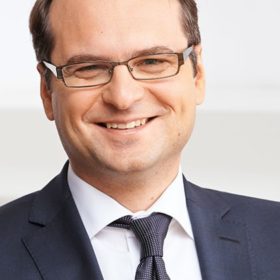
Energy without borders
Germany has long been a global leader in driving acceptance of clean technologies through its progressive energy policies and regulations. Its influence in addressing climate change extends well beyond its borders, and the country is taking an active role to support the global energy transition through international cooperation. Germany has bilateral energy partnerships with approximately 20 countries, and its strong partnership with California is focused on creating a route to the future – a carbon-neutral one. State Secretary at the Federal Ministry for Economic Affairs and Energy Andreas Feicht met with pv magazine to discuss the country’s partnership with California, and its journey toward decarbonization.
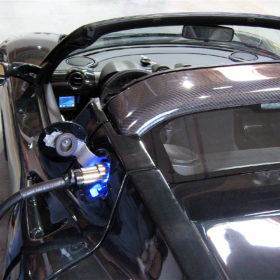
‘They created a rechargeable world’
American John B. Goodenough, Brit Stanley Whittingham and Akira Yoshino, from Japan, will receive the Nobel Prize for Chemistry for developing the lithium-ion battery. A statement from the Royal Academy of Sciences of Sweden said the invention “laid the foundations of a society without wires and fossil fuels, and [they] are of great benefit to humanity”.

It’s official: The bifacial tariff exemption is over
The office of the U.S. Trade Representative has removed the exemption of bifacial products from Section 201 tariffs, effective October 28.
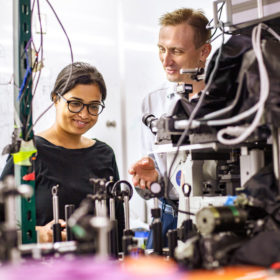
Questioning the quantum behavior of perovskites
Scientists at the University of Texas at Dallas have made a discovery they say has “altered the understanding of the fundamental properties of perovskite crystals”. Their findings could improve understanding of defect formation in perovskites, leading to devices with enhanced performance and stability.
