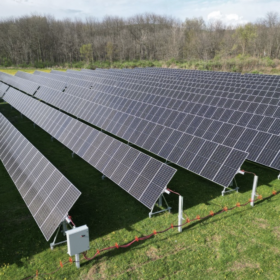
SEIA asks for public feedback on new C&I solar, storage standard draft
The Solar Energy Industries Association (SEIA) is seeking public comment on a draft for an upcoming standard that will establish the design, installation and quality requirements for solar and energy storage installations on large commercial and industrial properties.

Battery reprieve as US-China tariffs go on hold for 90 days
The battery industry relies on a supply chain in China, and previous headline tariff numbers had painted a tough picture for project affordability and bankability.
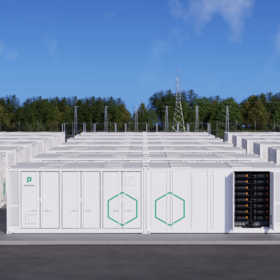
Powin introduces 6.26 MWh Pod Max containerized battery
Energy storage specialist Powin has launched Pod Max, a 6.26 MWh containerized lithium-ferro-phosphate (LFP) battery system that delivers 25% more energy density than its standard 5 MWh product. The liquid-cooled unit targets grid-scale applications.
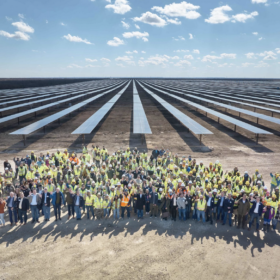
Watershed moment for Texas solar
As Texas suddenly finds itself a leader in both solar deployment and manufacturing, debate in the state legislature and US Congress could shape how much the Lone Star State once again will shape the nation’s energy trajectory.

The Hydrogen Stream: Sungrow starts world’s largest dual-tech green H2 plant
Sungrow Hydrogen has started production at China’s largest dual-tech green hydrogen project combining PEM and alkaline electrolyzers, while HNO International has partnered with Zhuhai Topower to pilot its modular hydrogen platform in China.
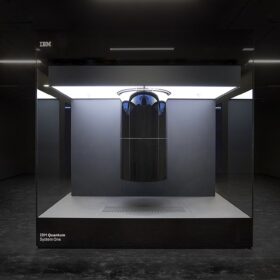
Quantum-based energy management method for PV-powered buildings
Scientists from Cornell University combined quantum computing with model predictive control to manage the energy of two PV-equipped university buildings. Compared to deterministic approaches, the quantum strategy achieved a 6.8% improvement in energy efficiency and an annual reduction of 41.2% in carbon emissions.

Ohio Supreme Court rejects local opposition to block 325 MW solar project
Despite Ohio’s intensified local opposition and restrictive solar restrictions in recent years, the state’s Supreme Court sided with the Ohio Power Siting board to allow a 350 MW project in central Ohio.
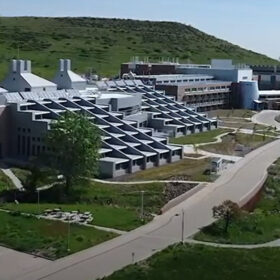
U.S. National Renewable Energy Lab announces layoffs
A statement released by NREL calls the layoffs an “involuntary separation,” thanks them for their work and acknowledges that the mission is critical to achieving “an affordable and secure energy future.”
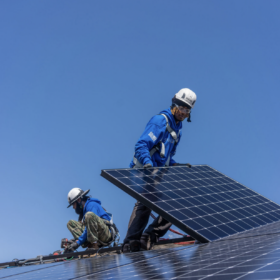
SunPower regains Nasdaq compliance, reports Q1 profit
SunPower has regained Nasdaq compliance and posted its first quarterly profit in four years, but the results remain unaudited. The company had received a deficiency notice for failing to meet listing requirements.

Strategies for de-risking early-stage renewable energy projects
Over 70% to 90% of early-stage projects fail and are never constructed, according to findings reported by Paces.
