Three US states drive community solar growth in Q3
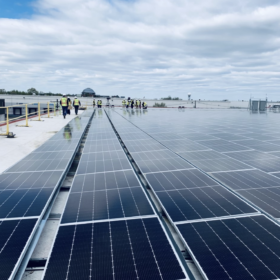
A new report from the Institute for Local Self-Reliance says non-utility community solar expanded meaningfully in only three US states in the third quarter of 2025 amid uneven policy support.

Solar powers the warfighter
2026 Defense authorizations highlight the need for U.S.-made photovoltaics in satellites to compete with foreign adversaries, writes Rob Gardner, vice president, congressional and regulatory affairs, for the SEMA Coalition.
Robotics driving US solar recycling capacity expansion
Solar recycler OnePlanet will draw on vision-guided robots and automation to scale its River City facility and recover more, purer valuable materials from spent panels.
US adds 21.2 GW of solar through September 2025
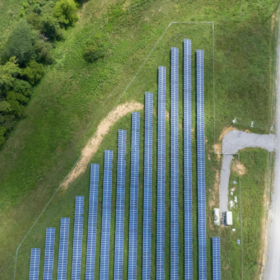
The US Federal Energy Regulatory Commission (FERC) reports that the United States added 21.2 GW of solar capacity in the first nine months of 2025, accounting for most of the 28.2 GW of total power capacity added to the grid.
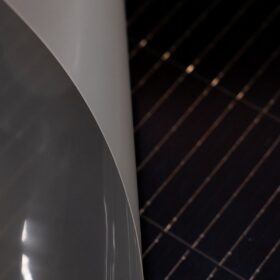
Endurans Solar launches transparent backsheet for utility-scale bifacial modules
The U.S. based manufacturer has completed certification of its latest adhesive-free, fluorine-free backsheet.
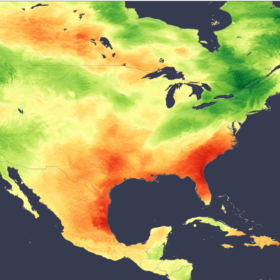
Atmospheric river cuts irradiance across Western North America
In a new weekly update for pv magazine, Solcast, a DNV company, reports that solar irradiance levels were well below average in western and northern United States in November, while southern parts of the country and Mexico enjoyed strong positive anomalies.

Agrivoltaics for sorghum, soybean grain
Researchers in the United States found that shading from agrivoltaic systems reduces grain numbers in both sorghum and soybean, but sorghum can partially compensate by increasing grain weight while soybean cannot. The study shows that sorghum and soybean respond differently due to their physiology, offering guidance for crop selection and management to minimize yield penalties in agrivoltaics.

US government renames National Renewable Energy Laboratory
The US Department of Energy (DoE) has renamed the National Renewable Energy Laboratory (NREL) in Colorado as the National Laboratory of the Rockies, a change it says aligns the institute’s mandate with the Trump administration’s applied energy priorities.
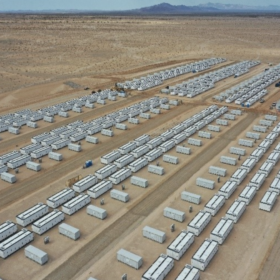
Canadian Solar consolidates US manufacturing assets
Canadian Solar says it will take direct control of its US solar and battery manufacturing assets through a new joint venture, shifting assets from its China-listed subsidiary and valuing the transaction at about $50 million.
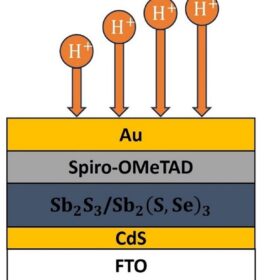
New research shows antimony chalcogenide solar cells are suitable for space use
Researchers in the US tested the degradation of antimony chalcogenide solar cells exposed to proton radiation. The result indicated a robust tolerance and potential for use in space.
