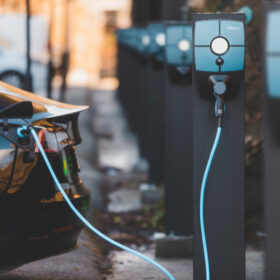
Bringing the benefits of affordable EV charging points to apartment blocks
One of the benefits of electric vehicle (EV) ownership is being able to plug your car into a wall at home ready for the following day’s commute but the idea is not so simple for apartment dwellers. Harald Seip, of EV charger company Elaway, suggests ways EU policymakers could solve that problem.
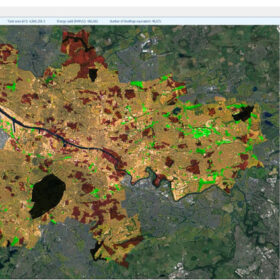
Online mapping tool to identify policy-suitable land for renewables
Called Geospatial Opportunity Mapping (GOMap), the new tool considers high-resolution information from both the local authorities and local utility companies. It is reportedly able to determine the number of rooftop or ground-mounted solar projects that can be deployed in a given area.

The Hydrogen Stream: Gulf nations moving forward with tech cooperation
Acwa Power and Eni have signed a hydrogen development deal, while AFC Energy has signed an agreement with Tamgo to sell hydrogen generators.
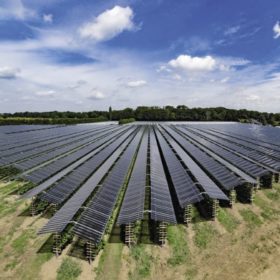
Italian Council of State clarifies rules for agrivoltaics
The Italian Council of State has issued new rules to address a number of regulatory gaps, according to lawyer Andrea Sticchi Damiani, who recently won two cases related to agrivoltaic projects. In both instances, the council confirmed that agrivoltaic facilities are distinct from conventional ground-mounted PV plants.

Amsterdam surpasses 1 million installed solar panels
Amsterdam has now installed more than 1 million solar panels, with the Dutch capital currently boasting 250 MW of rooftop PV capacity across 120,000 households. The municipal government aims to equip around 500,000 home with PV systems by 2040.
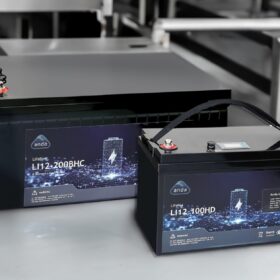
Anda-Olsen unveils lithium iron phosphate batteries
Anda-Olsen launched new LiFePo4 batteries that come with a built-in heating elements that reportedly makes them safe to use even in freezing temperatures. The manufacturer offers the new product in two versions with a nominal capacity of 100 Ah and 200 Ah, respectively.
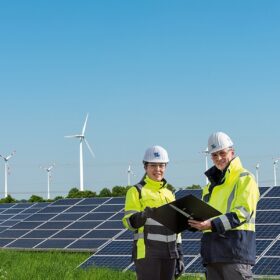
Uniper to build Germany’s largest PV plant
Uniper plans to power a green hydrogen production facility in the German state of Lower Saxony with 317 MW of solar.
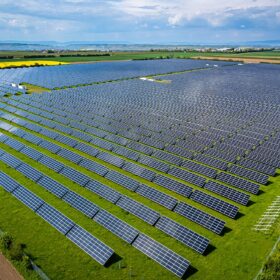
Italy’s solar installations hit 2.3 GW in H1
Italy deployed 2.3 GW of new solar capacity in the first half of the year, while its cumulative installed PV capacity reached 27.4 GW at the end of March, according to Italia Solare, the national solar energy association.
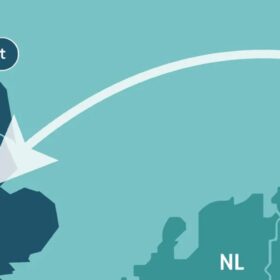
Prysmian completes world’s longest subsea interconnector
Italy’s Prysmian has finalized the deployment of a high-voltage direct current (HVDC) submarine transmission line spanning 1,400 km, connecting Denmark to the United Kingdom.
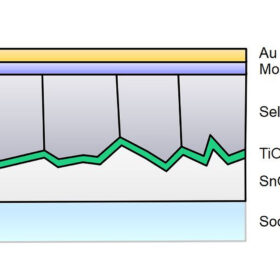
Selenium solar cell built with laser-annealing achieves record fill factor of 63.7%
Built by Danish researchers, the device also achieved a power conversion efficiency of 5.0%. They designed the cell with a soda-lime glass substrate, a tin oxide (FTO) layer, an electron transport layer made of titanium oxide (TiO2), a selenium absorber, a molybdenum oxide (MoOx) layer, and a gold (Au) metal contact.
