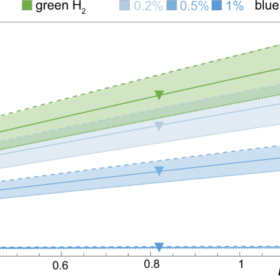
The Hydrogen Stream: US team assesses atmospheric methane risk for hydrogen
Princeton University researchers have published a study on how the transition to hydrogen-based energy systems would affect the tropospheric burdens of methane and hydrogen, while Provaris Energy said it is moving forward with its compressed H2 carrier.

Eiffage acquires French solar developer Sun’R
Eiffage Concessions, a unit of Eiffage, has acquired a 75% stake in Sun’R.
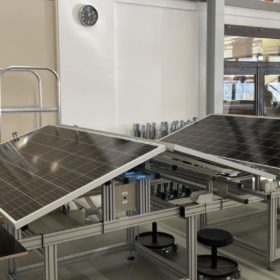
New foldable solar system for rooftop applications
German manufacturer Kopp has developed an easy-to-install, four-module foldable PV array. The system uses n-type TOPCon solar modules with outputs of 430 W and efficiency ratings of 22.02%
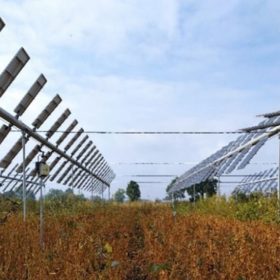
Agrivoltaics for soybeans
Italian researchers have looked at how soybeans could be grown in agrivoltaic installations and have found that the impact of shading is less significant than previously believed.
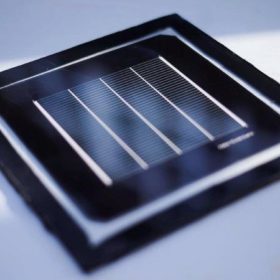
Meyer Burger to commercialize 29.6%-efficient perovskite tandem solar cells
Meyer Burger is working with several research institutes in Switzerland and Germany to integrate perovskite tandem technology into its manufacturing processes.
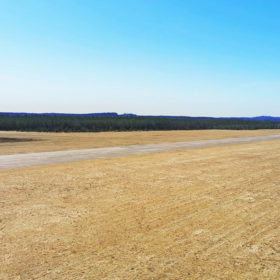
Alight, Neoen sign largest PPA in Sweden
Alight and Neoen have agreed to sell power to H&M from a 90 MW solar project under a long-term power purchase agreement. Construction will begin in the second half of 2023.
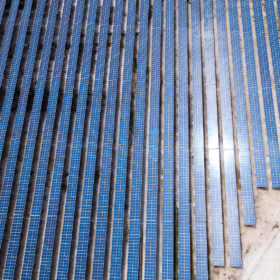
French solar tender concludes with final average price of $0.08112/kWh
The French authorities have allocated around 180 MW of utility-scale solar capacity in the nation’s latest procurement exercise.
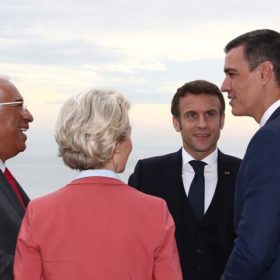
EU’s first hydrogen pipeline to connect Portugal, Spain, France
The leaders of Spain, Portugal and France have unveiled the H2Med energy interconnection project, which will supply Europe with hydrogen. H2Med, formerly known as BarMar, will be the first green corridor to connect the Iberian Peninsula with the rest of Europe. It will be operational in 2030.
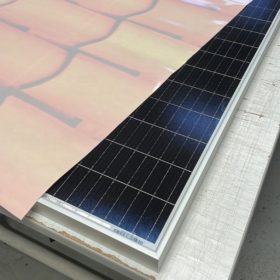
Customizable sticker to turn solar panels into advertising billboards
An Italian startup has created a fully recyclable sticker that can be used to cover solar panels on rooftops or facades. It replicates high-definition images that can help to improve the aesthetics of solar arrays or turn PV facades into advertising billboards.
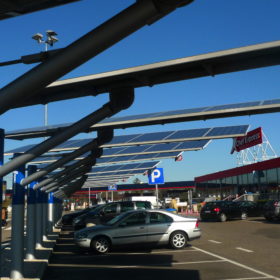
France introduces solar requirement for parking lots
The French parliament has approved a new measure to make it mandatory for parking lots to include solar if their surface area is more than 1,500 square meters.
