
Big solar already pulling its weight on emission reduction – especially in Chile
Following a disappointing COP27 climate change summit in November, solar industry veteran Philip Wolfe reviews the contribution utility-scale PV is starting to make to emissions reduction.
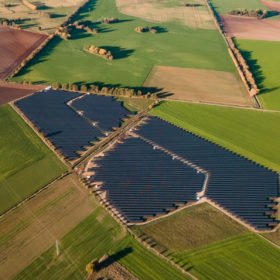
Germany installed 706.5 MW of solar in October
Germany added 6.1 GW of new PV systems in the first 10 months of 2022.
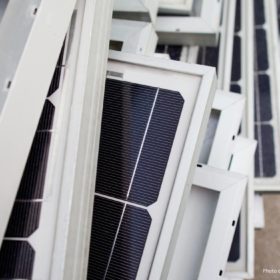
Itochu to start recycling solar modules
Japan’s Itochu has announced a new tie-up with France’s Rosi Solar, which develops tech to recover and recycle high-purity silver, copper and silicon from solar modules.

Solar panels with discarded ‘black gold’ from wafer production
A European consortium is trying to reuse discarded silicon powder from ingot and wafer manufacturing in several industrial applications, including PV production. The group is now identifying ways to decontaminate such materials.
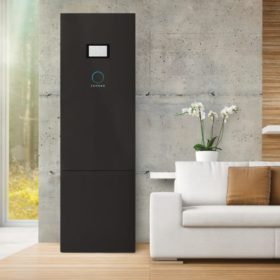
Italy hits 959 MW/1,826 MWh of distributed storage capacity
Italy added 303 MW/632 MWh of distributed energy storage capacity in the first nine months of 2022. The segment continues to grow in the country, led by the regions of Lombardy and Veneto.
Adiós, PERC; hola, TopCon
La tecnología TopCon y otras tecnologías de tipo N han dado el salto este año hasta convertirse en la corriente principal de fabricación fotovoltaica. En este pv magazine Webinar analizaremos, de mano de S&P Global, el crecimiento y las tendencias del mercado de los módulos de tipo N y de la tecnología TopCon, así como sus características técnicas. Junto con JinkoSolar, presentaremos su módulo más potente de tipo N, el Tiger Neo, con potencia de hasta 620 Wp, y la empresa compartirá sus planes de expansión de la fabricación con TopCon.
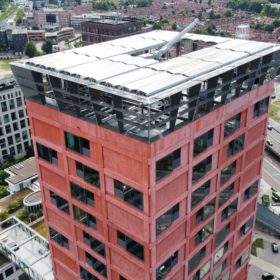
Rooftop system with PV panels, mini wind turbines in the Netherlands
Ibis Power has developed a rooftop system that combines solar with wind turbines designed for medium-sized structures and high-rise buildings. It claims its PowerNEST system can produce six to 10 times more energy than standalone rooftop solar. The company has already installed five projects in the Netherlands.
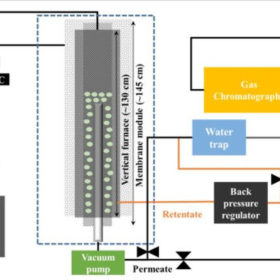
The Hydrogen Stream: Green hydrogen via ammonia decomposition
South Korean scientists have developed a highly selective palladium composite membrane on porous metal supports to cut the ammonia content of the permeated hydrogen stream. Dutch researchers, meanwhile, have presented two alternatives to this strategy – increasing the thickness of the membrane selective layer, or using a purification unit in the permeate of the membranes.
Netherlands changes grid code to reduce congestion, host more renewables
New rules in the Netherlands will allow new entities known as “congestion service providers” as intermediaries between grid operators and power plant operators, in order to make optimal use of the network.
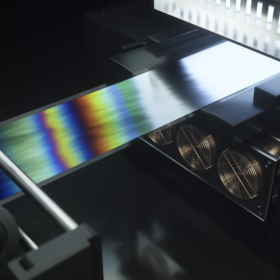
Perovskites and microgrooves can revolutionize solar
Ambitious targets for solar energy generation present challenges to an industry keen to explore new avenues for solar production. Neil Spann, chief executive of UK thin film solar manufacturer Power Roll, describes a commercial solution to the problems of over reliance on silicon solar modules.
