Renewable Solutions
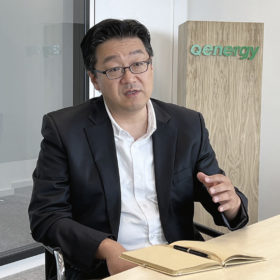
South Korean industrial giant Hanwha launched its new Q Energy business over the summer, and is moving forward with an ambitious strategy of energy projects across the European continent. pv magazine caught up with Sang Chull Chung, CEO of Q Energy Group, for a look at its plans to accelerate deployment of renewables to alleviate Europe’s energy challenges.
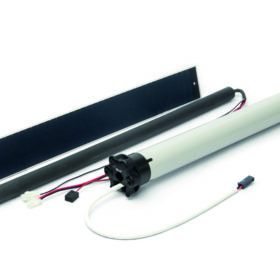
New solar-powered tubular motor for blinds
Next Series technology, produced by Italian smart home specialist Nice, facilitates a 35% reduction in energy consumption, compared with analog motors. The company says the solar kit is sustainable and easy to install.
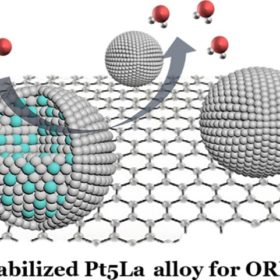
The Hydrogen Stream: Ultra-stable platinum-lanthanum for more efficient fuel cells
Tsinghua University researchers have developed a way to combine high-cost platinum and a rare earth element, lanthanum, to serve as a catalyst in fuel cells. Meanwhile, SSAB, LKAB, and Vattenfall have revealed plans to launch industrial production of hydrogen direct reduced sponge iron (H-DRI) by the end of this decade.
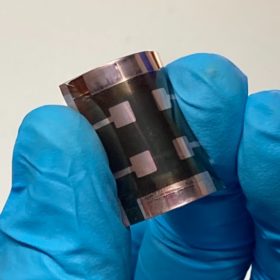
Flexible all-perovskite tandem solar cell with 23.8% efficiency, improved voltage
A Chinese-Swiss research group claims to have overcome two major challenges for the development of flexible all-perovskite tandem solar cells – voltage losses and the deposition process for the cell’s functional layers. They built a device with a high open-circuit voltage of 2.1 V.

Ireland’s first PPA for large-scale solar
Allied Irish Banks will buy electricity from two solar parks that NTR is now developing. The power purchase agreement has a duration of 15 years.
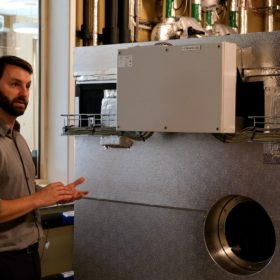
PCM-based thermal battery to store solar power via heat pump
Norway’s SINTEF has designed a heat storage system based on phase change materials (PCM) that can support PV generation and peak shaving. The battery’s container hosts 3 tons of liquid biowax based on vegetable oil and is now beating performance expectations at a pilot facility.
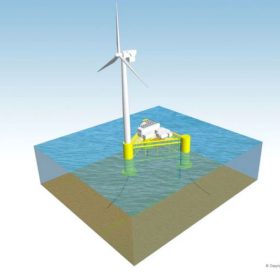
The Hydrogen Stream: UK consortium plans 10 MW offshore wind-hydrogen facility
A group of UK companies has started working on a 10 MW wind-to-hydrogen project, American Airlines has announced a new investment in hydrogen distribution, and ACWA Power has teamed up with South Korea’s Kepco to develop green hydrogen/ ammonia projects in the Middle East.
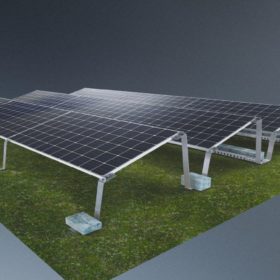
Aerocompact launches high-elevation mounting system for rooftop PV
Aerocompact’s new CompactFLAT GS mounting structure can be installed 40 cm above rooftop surfaces, with tilt angles of 10 and 15 degrees. The company says the product is ideal for bifacial solar arrays and green rooftops.
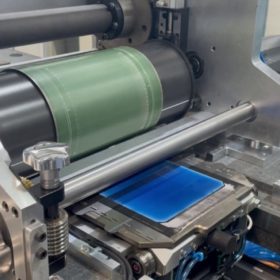
PV production equipment sales soaring in Europe
According to VDMA, a German engineering association, there are now more orders coming in for German production equipment from Europe than from China. Nevertheless, shipments to Asia remain dominant.

Swedish startup offers reusable nickel metal hydride batteries for renewables storage
Nilar International began manufacturing the ReOX reusable batteries at its factory in Sweden. The natural aging process of the battery is reversible and the battery is reportedly able to operate at full capacity at least three times.
