
Covid-19 outbreak at PV plant construction site in Portugal
A total of 6 Covid-19 positives have just been detected among workers at the Solara4 plant, located in the Portuguese Algarve. According to information obtained by pv magazine, work at the facility has been partially stopped.
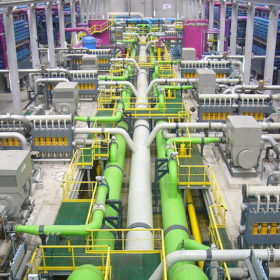
Floating PV for desalination
Spanish water-treatment specialist Emalsa has teamed up with Instituto Tecnologico de Canarias ITC and Universidad Europea de Canarias to study the feasibility of a 1.53 MW floating solar plant that could potentially power the Piedra Santa desalination plant in Gran Canaria.

Saipem wants to set up green hydrogen production in Italy, Albania and Morocco
The Italian gas contractor started to develop three green hydrogen projects in the southern Italian region of Apulia and has identified land for potential projects in Albania and Morocco.
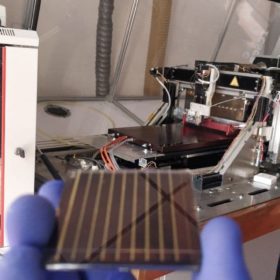
Air-processed perovskite solar cell with 18.3% efficiency
The methylammonium-free perovskite solar cell was fabricated through a deposition technique that is claimed to reduce by around 30% the use of solvents during the perovskite deposition. The estimated overall cost of the proposed synthetic process is around €0.025 per cell.

Meyer Burger to start PV cell, module production in May
Swiss solar manufacturer Meyer Burger is now looking for people to work at its new factories in Freiberg and Bitterfeld-Wolfen, Germany. The two facilities are scheduled to start production in May.

Adding solar to offshore wind
Scientists in the Netherlands conducted a feasibility study for adding floating solar to a planned 752 MW offshore wind installation in the North Sea. The study finds that the two could realistically share a single connection to an onshore grid, with minimal curtailment as well as technical and economic benefits for both technologies.

Italian sovereign wealth fund joins forces with Eni to deploy 1 GW of solar and wind
Cassa Depositi e Prestiti Equity and the Italian energy giant have created a joint venture that will invest around €800 million in renewables in their homeland by 2025. The two companies are planning to build large scale plants with the option of utilizing properties owned by the Italian government.
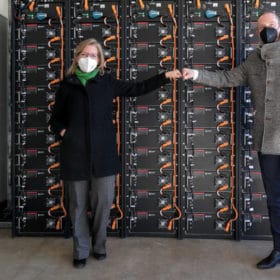
Solar mini-grid to protect Austrian highway from blackouts
The Austrian motorway company Asfinag is planning to power, with solar-plus-storage, all its maintenance facilities. These installations are planned to power the stations at night and in the event of a grid failure.
Portuguese authorities review 1 GW solar project with Tesla batteries
A newly proposed solar project in Portugal could almost double the nation’s installed PV capacity. The installation will likely require an investment of around €1 billion.
Northvolt acquires lithium-metal battery start-up Cuberg
The technology developed by a business spun out of Stanford five years ago could deliver an electrolyte with energy density of more than 1 kWh/l.
