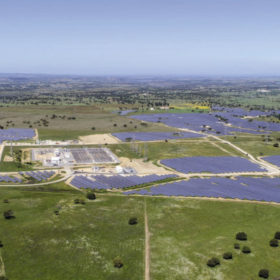
A game-changer for PPA markets
Extreme volatility and high prices recorded on energy markets, coupled with inflation, and soaring interest rates are impacting long term power purchase agreements. Still there is a way to the success and signing of contracts.
How to get to 100% emissions-free electricity
The National Renewable Energy Laboratory is exploring different paths to 100% emissions-free electricity in the United States.
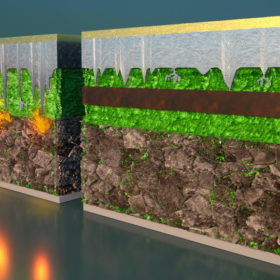
The mobility rEVolution: Rapid-charging solid-state battery moves toward commercialization
US researchers have developed a new solid-state lithium-metal battery, and China’s SVOLT has started producing prototype solid-state cells. Toyota, meanwhile, has revealed plans to invest billions of dollars in battery production.
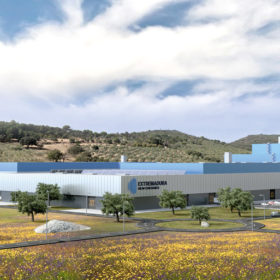
The weekend read: The need to achieve autonomy in energy
At the beginning of June 2021, during a meeting with Spanish businesspeople organized by the Portuguese-Spanish Chamber of Commerce, the Portuguese Prime Minster António Costa urged his neighbors to work on jointly exploiting the potential of plentiful lithium reserves found on the Iberian Peninsula. As Luis Ini reports from Madrid, his words reflect an increasingly evident reality: the need to achieve autonomy in the field of energy, especially in energy storage.
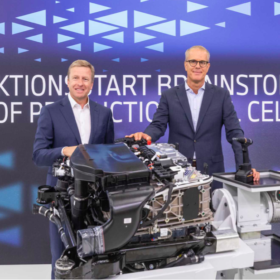
The Hydrogen Stream: BMW starts in-house production of fuel cells for iX5 Hydrogen
BMW Group said it is targeting the premium segment with its iX5 Hydrogen car, Topsoe revealed that it will invest $267 million to build the world’s largest SOEC electrolyzer plant in Denmark, and Bosch announced plans to invest $200 million in US fuel cell production.
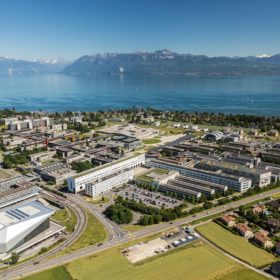
The economics of perovskite solar manufacturing
Scientists in Switzerland put together a detailed analysis of the projected costs of designing and operating a 100 MW perovskite solar cell production line in various locations, taking in labor and energy costs as well as all materials and processing. The found that perovskite PV could be cost-competitive with other technologies even at much smaller scale, but noted that this still depends on the tech proving its long-term stability, and impressive achievements in research being successfully transferred to commercial production.
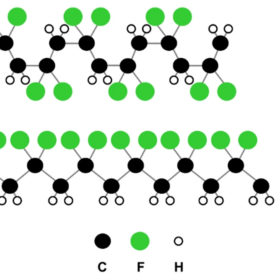
Putting polyvinylidene-fluoride backsheets to the test
US scientists tested PV modules built with backsheets and polyvinylidene-fluoride (PVDF) layers, to replicate the degradation the material has suffered in the field of accelerated testing. By exposing the modules to multiple stresses, they were able to cause degradation in the backsheet materials. Though this did not closely match what has been seen in the field, such testing can be useful in identifying potential weaknesses.
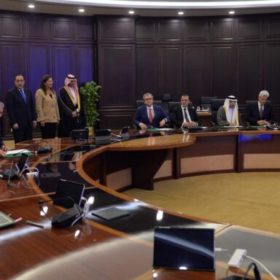
The Hydrogen Stream: Globeleq to build solar-powered 3.6 GW green hydrogen plant in Egypt
Egypt’s hydrogen strategy is taking shape ahead of COP27 through agreements with Globeleq, Actis, and Alfanar. Elsewhere in the world, the US authorities are investing in blue hydrogen, and the city of Hamburg, Germany, has signed three agreements with Chile, Uruguay and Buenos Aires.
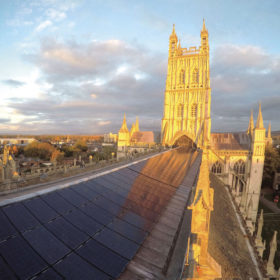
The weekend read: Historical and landmarked buildings turn to solar amid changing policies, rising prices
The urgency of rooftop solar uptake has only been accelerated by the current energy crisis, but the spread of PV to historic and landmarked buildings remains limited. In Europe, historic buildings constructed before 1945 represent at least a quarter of total building stock. To boost uptake, some municipalities are considering a loosening of their protection policies, while researchers are finding interesting byways for installation. Furthermore, building integrated PV solutions are being touted as the ideal compromise between aesthetic continuity and new generation opportunities.
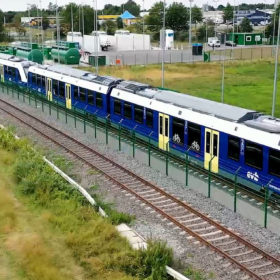
The Hydrogen Stream: Germany launches world’s first operating hydrogen trains
Germany has launched the world’s first operational hydrogen trains and US researchers have presented a novel design for a tubular PEM fuel cell. ABB and Hydrogen Optimized, meanwhile, have expanded their strategic ties and Slovakia has moved forward with a major gas-blending pilot project.
