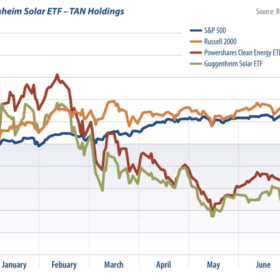
Guggenheim Solar Index: Underperforming solar stocks and significant challenges
In June, solar stocks underperformed, writes Jesse Pichel of ROTH Capital Partners. The U.S. residential market retains a positive outlook, though rising prices and forced labor concerns represent significant challenges.
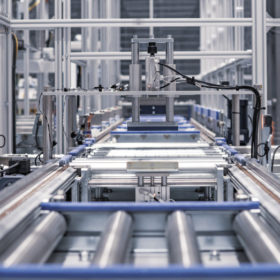
Europe’s gigafactory boom – 25 by ‘25
A gigafactory, as the name indicates, is a facility that aims to produce Li-ion cells at a gigawatt-hours scale of total capacity, so they can then be used in electric vehicles or stationary storage applications. The global production capacity of Li-ion cells is expected to reach 740 GWh by the end of 2021 – almost a threefold increase from 2017 – and Europe will account for 8% of the total. João Coelho, an analyst at Delta-EE, looks at how Europe plans to catch up.
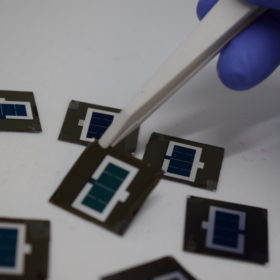
n-type perovskite tandem cell hits 27% efficiency
Scientists demonstrated a perovskite-silicon tandem cell that reached 27% conversion efficiency. Though higher tandem cell efficiencies have been achieved, this represents a big jump in efficiency for those utilizing n-i-p architecture, which previously had not surpassed 22%.
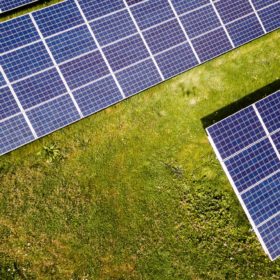
‘Lack of objections should mean permits are automatically granted for solar’
The question of overly complicated, time-consuming permitting processes again raised its head at a two-day online event held by the Global Solar Council to examine how to accelerate deployment of photovoltaics.
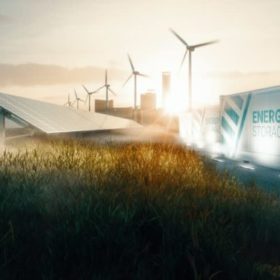
New research points to cheaper green hydrogen by 2030
New modeling by Monash University researchers has shown that the cost of green hydrogen with solar PV could satisfy the Australian government’s economic stretch goal of AUD 2 ($1.50) per kilogram by as early as 2030.
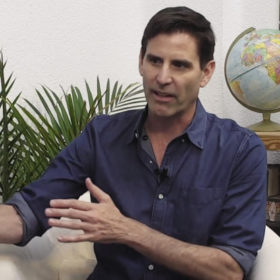
The weekend read: Looking at the energy transition’s bigger picture
Mark Jacobson, director of the atmosphere/energy program at Stanford University, has developed roadmaps for 143 countries to meet 100% of their energy demand from power generated by wind, water, and sunlight. In every case, these roadmaps promise major reductions in energy costs, while mitigating the effects of climate change and air pollution. pv magazine checked in with Jacobson for a look at the energy transition’s bigger picture.
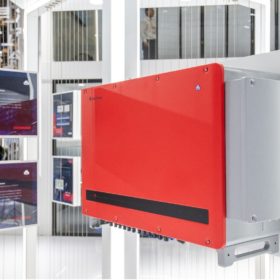
GoodWe founder on PV inverter trends, opportunities, and the key to business success
At this year’s SNEC event in Shanghai, China, pv magazine took the opportunity to talk with GoodWe founder and chairman, Daniel Huang. He outlined the key PV inverter trends he expects to see over the coming years and discusses growth from a domestic company to a multinational player with offices across the world. Overall, he abides by three key ingredients for business success.

The prospects for solar in a 1.5C world
We will need 10.7 TW of clean energy generation capacity this decade to stay on track with the most ambitious of the climate change paths agreed in Paris, which would include plenty of solar investment and jobs, according to the International Renewable Energy Agency.

Solar beach umbrella cools you … and your gelato
An MIT-spawned company has teamed up with architects and an Italian frozen-desserts brand to design an origami-inspired umbrella to power fridges.

The Hydrogen Stream: Chile and Germany join forces to develop viable green hydrogen projects
Furthermore, Texas oil field services company Baker Hughes and engineering, procurement and construction company Samsung Engineering have announced a collaboration with regards to low to zero-carbon projects utilizing carbon capture, utilization and storage (CCUS) and hydrogen technologies.
