
Australia and India helped make up for Chinese solar retreat last year
The world had more than half a terawatt of PV generation capacity at the end of last year as emerging solar markets picked up the slack caused by Beijing’s subsidy about-turn to the tune of a 20% rise in installations outside China.

DuPont unit and Fraunhofer ISE to work on c-Si module testing
The PV solutions division of DuPont Electronics and Imaging has revealed plans to work with the Fraunhofer ISE on optimizing testing protocols for crystalline silicon solar modules.

Alternative charging options drive down battery costs for ebuses
All-electric buses will cost the same as diesel options by 2030 – and possibly earlier – according to research into the global EV market.

The weekend read: Out with the old…
PV demand started weakly this year but will show an upward trend in the second half. Corrine Lin, chief analyst at PV InfoLink, examines supply and demand for polysilicon and predicts huge new capacities will come online in the west of China and shake up the market, spelling bad news for some international players.

Getting (almost) all our energy from the sun by 2050
Solar could meet approximately 68% of global energy demand with other renewables making up the rest, according to a new report. A 100% renewable energy system could also create 22 million solar jobs by 2050, the study claims. Keeping global warming below 1.5 degrees C, though, would require FITs for projects up to 40 MW in capacity, auctions for bigger systems, removing fossil fuel and nuclear subsidies and providing more education and R&D and less red tape.

Solar investment mostly up on venture capital and debt as money pours into large scale projects
Mercom Capital Group’s Q1 2019 Solar Funding & M&A report has registered $2.8 billion in venture capital, public market and debt financing, up from $2.5 billion a year ago. Large scale project financing reached a record $5.58 billion across 43 deals and there were 18 solar corporate M&A transactions.

Inverter maker offered customer €50 for replacement product which would have carried ‘thousands of euros’ of associated costs
Often, it is not inverter faults that frustrate customers – such things happen – it is poor customer service. Here we look at the first of a series of cases that will be discussed at the pv magazine quality roundtable planned for Intersolar Europe, in Munich, which indicates what the industry must avoid in future.

Tesla, GAF, RGS and now Hanergy: will solar roofs finally heat up this year?
Hanergy displayed the newest rendition of its 18.7% Thin Film Flat SOLARtile in Australia last week as it gears up for the U.S. and global product launch later in 2019.
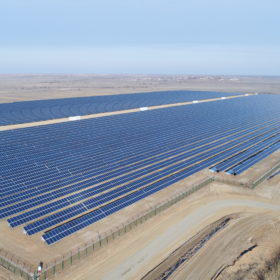
Global solar may reach 8,500 GW by 2050 – IRENA
Solar and wind could account for three-fifths of electricity generation in 2050, with more than 14.5 TW of installed power. Lumped together, renewables are expected to reach a power generation capacity of around 20 TW.
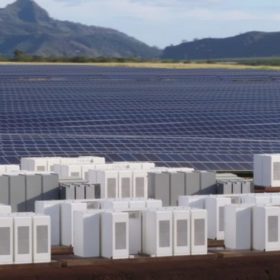
Storage set to come of age in the next five years
The transition for utility scale storage from offering short duration, high value grid services to the world of long duration energy peaking could spell the end of fossil fuel backup generation within five years.
