
Macron climate summit draws big announcements, but they still fall short
A number of parties used the One Planet Summit in France yesterday to either reaffirm clean financing commitments, or unveil new ones. However, the figures still fall short of the US$6.3 trillion the OECD has calculated is needed annually.
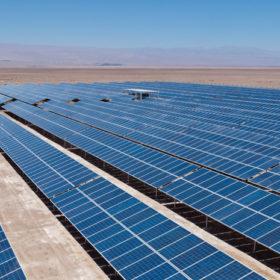
GE slashes 12,000 jobs in response to changing power markets
GE Power has announced 12,000 jobs will go as part of its effort to cut structural costs by US$3.5 billion. Part of the reason for the move is the strong growth of renewables, and a softening of traditional power markets. Storage is said to be a “mega trend”.
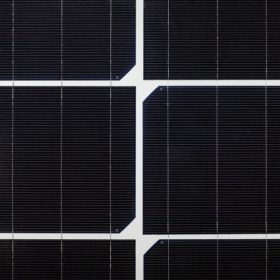
The weekend read: Every last watt
PERC power: As PERC settles into its position as a mainstream technology, leading module manufacturers are searching for ways to push ever more watts out of their module, and eliminate lingering degradation issues. So far this has included ramping up production capacities for half-cell modules and developing innovative new connection strategies. pv magazine looks into the latest technologies leading to gains in power output and quality at module level.
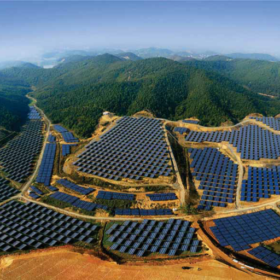
Solar PV 2018: Installs of 111 GW, a polysilicon factory boom and $0.30/W for modules
On the back of high solar PV installs, which will smash records this year at just under 100 GW, BNEF’s optimistic demand forecasts place growth at 111 GW in 2018, rising to 121 GW in 2019. It further sees a polysilicon factory boom, with production 10% up on 2017; and module prices dropping to as low as US$0.30/W for market leaders.

NASA develops new tool to measure total solar irradiance
NASA is on course to more accurately monitor the level of solar irradiance that reaches the earth, with the launch of a instrument for the International Space Station.
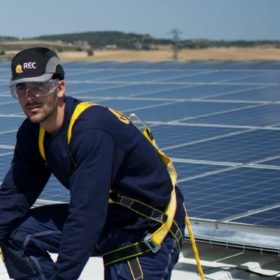
European PV market expected to grow by 35% in 2018 – GTM Research
European countries such as France, Germany, the Netherlands and Spain are all forecast to be gigawatt-scale markets in 2018. Globally, around 606 GW of new PV capacity is forecast to be installed between 2017 and 2022.
Solar deployment in developing countries soars by 54% YoY, finds BNEF
A total of 34 GW of new solar power generating capacity came online in 2016 in 71 emerging market countries, finds the latest Climatescope report by Bloomberg New Energy Finance.
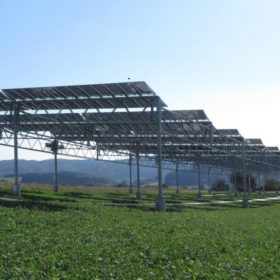
PV increases efficiency of cultivatable land use by more than 60%, Fraunhofer ISE says
Until now, cultivatable land was destined either for the generation of energy, or for food production. However, a pilot project, run by the Fraunhofer ISE, shows the two are compatible.
French forces unite to develop solar PV desalination plants
Two French companies have partnered to develop projects that combine renewable energy generation with water desalination. This is an area the solar sector is targeting specifically for the developing world, due to its off-grid compatibility.

DNV GL: AI will make renewables more efficient
A paper published by consultancy DNV GL forecasts major growth in the use of artificial intelligence (AI) applications within renewable energy, and outlines the risks and opportunities of such technologies.
