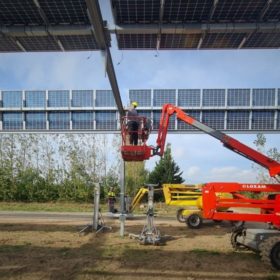
New tracker design for agrivoltaics
Spanish company Axial Structural is introducing a new type of tracker for agrivoltaic installations. The product can be adapted to various ground conditions and gradients, with programmable to optimize light and shade for different crops in different climates.
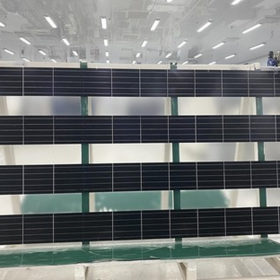
Vietnamese manufacturer unveils PV module for agrivoltaics
Vietnamese manufacturer Irex has announced a new glass-glass solar panel with a power output of 265 W and a power conversion efficiency of 18.1%.
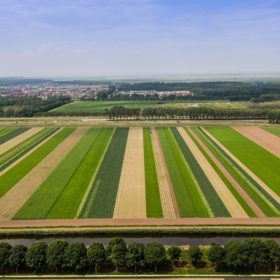
Agrivoltaics for strip farming
Vattenfall is leading a Dutch consortium in a research project to assess whether agrivoltaics is also compatible with strip cropping. The company’s head of Solar Development NL, Annemarie Schouten, spoke with pv magazine about the first 0.7 MW pilot project under development in the northern Dutch province of Flevoland.
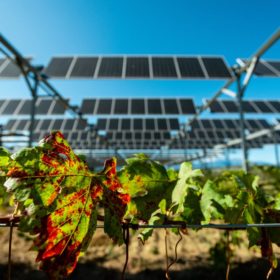
Agrivoltaics for viticulture
French specialist Sun’Agri installed a pilot facility on five hectares in southern France in 2018. Its goal is to protect the vines from weather hazards and to improve the quality of the wine by lowering its alcohol content. The first harvest took place in mid-September.
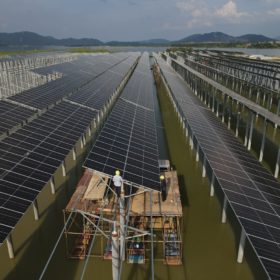
Solar park under construction at Chinese fishery
A 50 MW unsubsidized solar PV plant is being developed by Chinese mounting system provider Chiko Solar at a fishery in China’s Jiangxi Province.

Agrivoltaics for rabbit farming
U.S. scientists have developed a new way to combine PV generation and rabbit farming. They claim their new approach to agrivoltaics produces lower emissions and uses less energy than non-integrated methods.
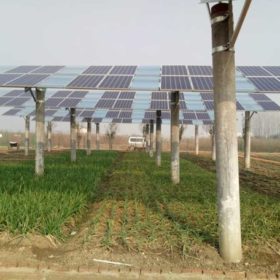
Novel plant design for agrivoltaics
Developed by Chinese researchers, the novel design methodology consists of utilizing metal brackets as mounting structures, conventional solar panels, and a grooved glass plate placed between the solar panels. According to its creators, it ensures a farmer’s average income increases by 5.14 times, including the solar power generation business. A system built with this approach should cost around €715 per kW installed.
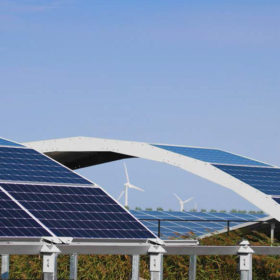
Arc-shaped PV system for agrivoltaics from Germany
The PV mounting system was developed by Germany-based Goldbeck and will initially be available in the Netherlands from 2022. The company will test the new technology in a 45 MW PV project.

US farmers opting for solar leases over carbon sequestration contracts
In a recent Purdue University survey, farmers reported adopting solar leases at more than double the rate of carbon sequestration plans as a much higher price-per-acre was offered.

Draghi must deliver on promises to simplify Italian solar permits
The current planning regulations would mean Italy not hitting its 2030 climate change targets for another 70 years and clean energy trade bodies say the Simplification Decree being debated in parliament – which was drafted to secure €191 billion of EU cash and loans – does not go far enough.
