
Zurich launches insurance for agrivoltaics
Zurich Group Germany has introduced a modular insurance product addressing crop, livestock, and equipment risks on land used for simultaneous farming and solar power generation.
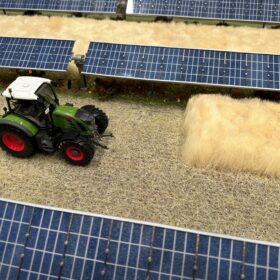
Czechia expands rules for agrivoltaics, permits vertical installations
Amendments to rules governing agrivoltaics in Czechia mean it will now be possible to deploy vertical agrivoltaics, or have installations on arable land if vegetables with high or very high labor intensity are grown at least once every three years.
Uncovering attitudes towards agrivoltaics via community engagement
An American research group has conducted a pilot workshop for agrivoltaics stakeholders in Arizona, including farmers, developers, government officials and indigenous leaders. A reflection paper offers some key takeaways for future public participation.

Germany’s largest agrivoltaic project goes online
Vattenfall has commissioned a 76 MW agrivoltaic plant in Germany under a long-term power purchase agreement (PPA) with a subsidiary of Deutsche Telekom AG.
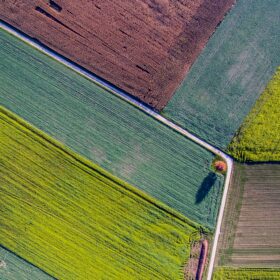
Decision making tool for crop selection in agrivoltaics
Researches in Germany have created a comprehensive crop selection tool for agrivoltaics across more than 25 countries. The proposed matrix evaluates species-specific responses of 12 major crop types to shading, microclimate changes, and crop growth, while also assessing their water needs, shade tolerance, and space requirements.
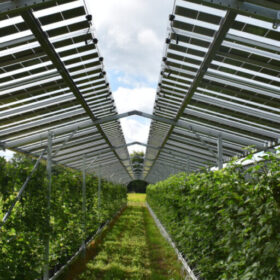
Germany offers best European policy for agrivoltaics, claim researchers
Scientists in Canada studied romaine lettuce growth under cadmium telluride thin-film solar modules with varying transparency and photosynthetically active radiation, and found Germany’s regulatory framework most effective for maximizing agrivoltaic benefits.

Agrivoltaics for sugarcane
Brazilian scientists have investigated the potential of agrivoltaics on sugarcane fields and have found this combination may provide benefits in terms of both agricultural and electricity yield. Their results showed that under certain conditions the sugarcane yield below the panels can be higher than that of plots without PV.

Researchers highlight importance of site-specific agrivoltaics design
A research team from Temple University in Philadelphia analyzed the synergies and trade-offs of land conversion to agrivoltaics and other multi-use solar energy landscapes globally. They found that co-located solar systems should be specifically tailored in order to offer optimal performance and minimize negative impacts.

Agrivoltaics on rice fields, not a lost cause
Researchers in Japan have made another attempt to make agrivoltaics on rice fields technically and economically feasible, despite well-known productivity issues when rice is grown below solar modules. They used double-axis tracking, finding potential with careful management of shading and tilt angles.
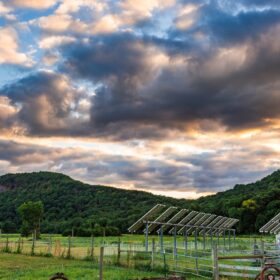
Agrivoltaic shading, full-sun fields gives farmers the power to pivot
Research conducted at the oldest agrivoltaic research site in the United States found year-to-year weather variability impacts agrivoltaic crop production, emphasizing the importance in conducting studies across multiple years.
