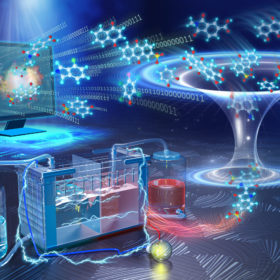
Scientists identify molecules for potential use in redox flow batteries
Scientists at the Dutch Institute for Fundamental Energy Research (DIFFER) have set up a database of 31,618 molecules that could potentially be used in future redox flow batteries. They used artificial intelligence and supercomputers to identify the properties of the molecules.
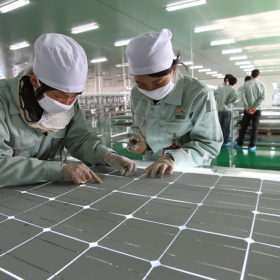
AI method learns from experienced staff on perovskite solar production lines
Academics from MIT and Stanford who have posited a new production method for perovskite solar cells have also developed a machine learning system which benefits from the experience of seasoned workers – and they’ve posted it online for anyone to use.
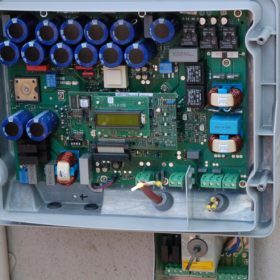
Solar inverter fault detection techniques at a glance
New research has categorized all existing fault detection and localization strategies for grid-connected PV inverters. The overview also provides a classification of various component failure modes and their potential causes in a tabular form.
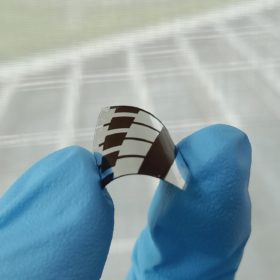
Google lends a hand in the search for new solar cell designs with open-source tool
Scientists in the United States developed a computer simulator that can calculate the conversion efficiency of different solar cell materials and configurations – helping to guide research and optimization of new cell designs. The simulator is available to researchers as an open-source tool to save time and spot the best opportunities for optimization of any given approach.
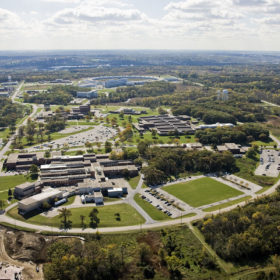
Narrowing down a million molecules for the optimal flow battery
Scientists in the United States turned to artificial intelligence to speed up their search for new materials for use in a flow battery. The group developed a machine learning algorithm that could search a dataset of potential materials and identify those with the ideal balance of different characteristics that make it suitable for use in a flow batteries. The group says its algorithm could be applied to other battery technologies, and even in other fields.

Global online inventory of PV systems exceeding 10 kW in size
Through the inventory, an international group of researchers was able to identify 68,661 PV facilities, totaling 423 GW across 31 countries. According to the scientists, the online database provides insight into global trends for PV siting decisions, as well as into the gap between facility-level final investment decisions, construction start dates, construction completion dates and facility operations.

Climate Change AI unveils US$2 million grant program
Artificial intelligence is already demonstrating its climate change chops, for example by analyzing satellite images to better detect and monitor methane leaks from fossil fuel infrastructure.
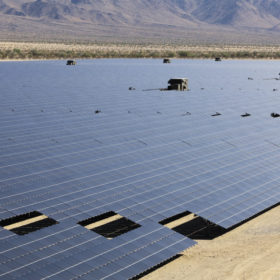
First Solar plans a 3.3 GW Indian module fab
The U.S.-based manufacturer is planning a vertically integrated thin-film solar module manufacturing facility in India. The factory will likely be built in Tamil Nadu and become operational in the second half of 2023.
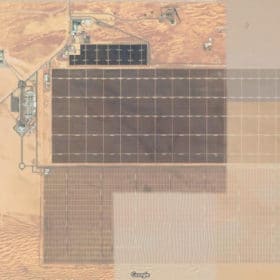
Stanford-UAE collaboration tightens solar module forecasting performance
Utility DEWA is leveraging space technology to improve forecasting as the nation continues to develop its gargantuan solar park in Saih Al-Dahal, 50km south of Dubai.
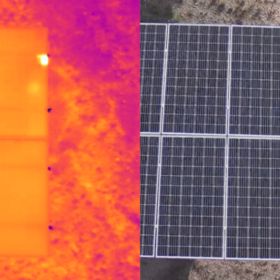
Australian utility deploys AI-powered drone tech to monitor PV assets
SA Water, one of the largest water utilities in Australia, has partnered with aerial solar inspection specialist Above to monitor the performance of its 360,000-plus solar panels.
