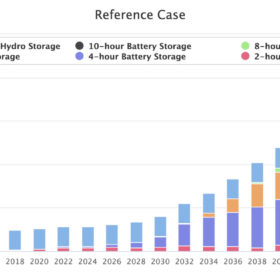
NREL’s storage projections for 2050
The National Renewable Energy Laboratory’s (NREL) final report on the future of storage presents “key learnings” from a series of six in-depth studies.
The mobility rEVolution: Honda ups the ante on EVs, solid state batteries
In other news, further Covid-19 lockdowns in China continue to negatively impact the EV battery supply chain and broader industry, Porsche is testing V2G capabilities, and Israeli startup Electreon announces extension of its wireless dynamic EV charging project in Sweden.
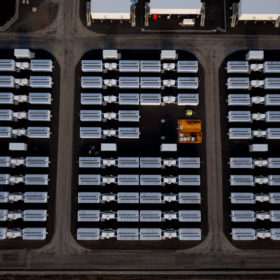
Neoen, AGL sign Australia’s first grid-scale virtual battery contract
French renewable energy developer Neoen has signed a seven-year agreement with Australian utility AGL to provide 70 MW/140 MWh of virtual battery capacity in New South Wales.
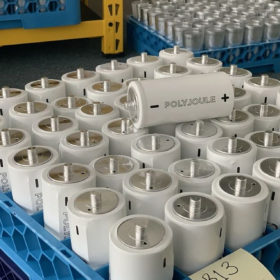
US start-up develops polymer-based batteries for stationary storage
Developed by an MIT spin-off, the device is based on a standard, two-electrode electrochemical cell containing conductive polymers, a carbon-graphene hybrid, and a non-flammable liquid electrolyte. The battery cells were tested to perform for 12,000 cycles at 100% depth of discharge.

Globally significant vanadium mine in Australia ‘bankable,’ construction slated for 2023
A major Western Australian mine targeting the global vanadium battery market was this week found to be bankable, with feasibility studies confirming the project’s “strong commercial case for development,” its owner Australian Vanadium Limited said.
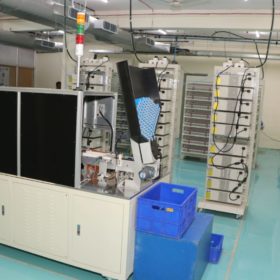
ITP opens 100 MWh lithium battery factory in India
Indian Technological Products (ITP) will produce customized lithium battery packs for electric vehicles and stationary energy storage applications, including solar, at its new 100 MWh lithium battery factory in Gurugram, India.
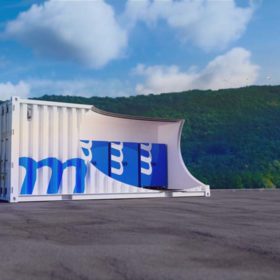
Repurposing EV batteries for offgrid applications
Moment Energy is one of several companies and projects supported by the ARC program, which aims to provide clean-energy storage to urban and remote diesel-dependent communities in the Canadian province of British Columbia.
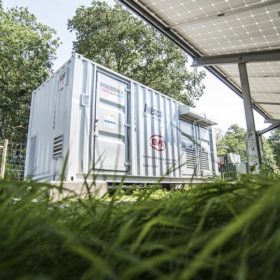
Asia Pacific to lead global battery storage market by 2026
The global battery storage market will reach $10.84 billion in 2026, with the Asia-Pacific region accounting for 68% of total demand. China, Japan, India, South Korea and Australia will drive the regional market, according to GlobalData.
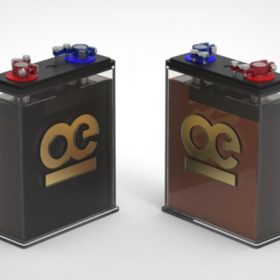
Indian startup unveils zinc-based battery tech for stationary applications
A startup incubated at the Indian Institute of Technology Kanpur has introduced ZincGel battery tech, which could offer significant savings for owners of two-wheel electric vehicles.
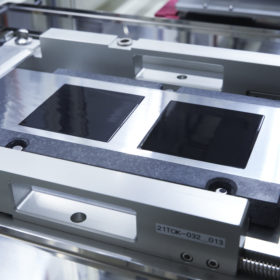
The mobility rEVolution: Nissan moves forward with in-house all-solid-state battery production
In other news, GM and Honda are jointly developing affordable EVs, the Biden administration holds an EV industry meeting, and Mercedes-Benz Energy agrees to supply EV batteries to BatteryLoop for its scalable, circular energy storage products.
