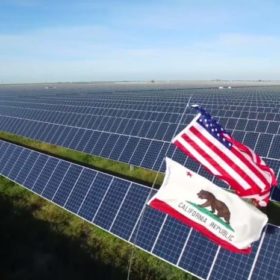
Big batteries are coming to California
Macquarie has closed on funding for a third portion of a 340 MWh project in Southern California, and LADWP is planning 1.8 GW of batteries.
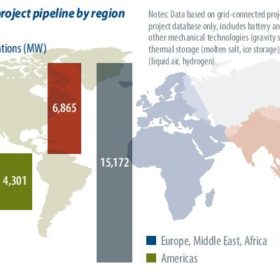
Global battery storage pipeline reaches 15 GW
As data drifts in, 2018 is shaping up to have been a record-breaking year for battery energy storage, writes IHS Markit senior analyst Julian Jansen. Especially for front-of-the-meter projects, which experienced rapid growth. This growth was led by significant activity in South Korea, the United Kingdom, the United States, Australia, and China, which together accounted for 78% of battery energy storage projects commissioned in 2018, according to the Q4 2018 edition of the IHS Markit “Energy Storage Company and Project Database.”
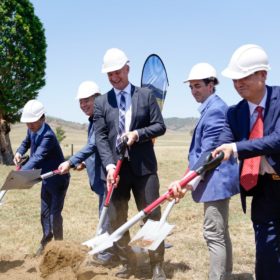
1.5 GW solar, 500 MWh battery project breaks ground in Australia
The first sod has been turned on a massive solar+storage development located between Harlin and Kilcoy, in south-east Queensland. The project was proposed by Sunshine Energy Australia, a newcomer to the Aussie solar scene.
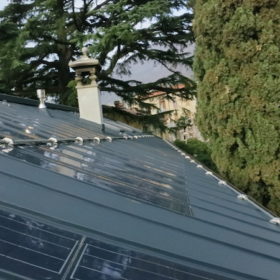
Italy extends fiscal incentive for residential PV to storage
The Italian Revenue Agency has clarified that the purchase and installation of a residential storage system linked to a rooftop PV system may also take advantage of the 50% of Irpef deduction, an indirect incentive that has played a major role in driving solar growth in the residential and commercial segments over the past years.

Emergency power supply vs. full home backup: Your questions answered
Solar battery systems should maintain power supply when the grid goes down. Right? Well, it’s not always that simple. A recent pv magazine Australia webinar, hosted in partnership with SMA, was looking into different homeowner needs and ways to install an emergency power or ‘full home backup’ system. Here are the answers to some of the webinar attendee’s questions.
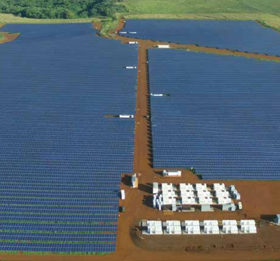
US grid-connected battery energy capacity grew 68% last year
A utility survey shows battery storage capacity growing sharply, including solar + storage installations in several U.S. states. Looking ahead, FERC Order 841 could spark extensive new storage for grid services, helping more utilities become familiar with storage and its benefits.

Building a battery manufacturing industry in India – Vision Mechatronics interview
Dr Rashi Gupta, Director at Vision Mechatronics discusses the EV landscape in India, particularly focusing on the potential for battery manufacturing. While there are currently many challenges, like a lack of raw materials and infrastructure, the opportunities are immense.
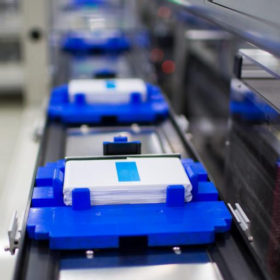
China’s CATL to invest €240 million in Europe’s first battery cell fab
The Chinese battery manufacturer has said it will establish a fab in Germany’s Thüringen with an annual capacity of 14 GWh. The battery cells will be primarily produced for the electric vehicle (EV) industry. Up to 600 jobs are expected to be created. In related news, BMW has entered a €4 billion long-term partnership with CATL.

Falling battery costs to push solar, wind to 50% electricity generation by 2050, but electricity still failing CO₂ reduction targets – BNEF
Solar PV capacity is set to grow 17-fold, and wind six-fold, by 2050, to account for nearly half of global electricity generation, predicts BNEF, while investments will reach US$11.5 trillion. Cost reductions will drive this charge, particularly in the battery market, which will benefit from the EV manufacturing ramp up. Despite this, the electricity sector is still failing to bring CO₂ emissions down to the required levels, with its continued dependence on gas.
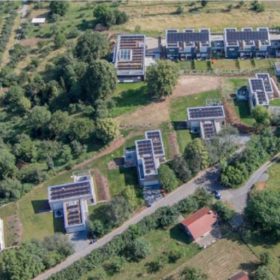
Battery Inverter Webinar with Kaco: Your questions answered
Kaco developed its Blueplanet gridsave 50.0 TL3-S battery inverter based on experience gained from storage projects in Europe. In pv magazine‘s recent webinar in partnership with Kaco, a number of questions were raised about the device, which the experts now answer.
