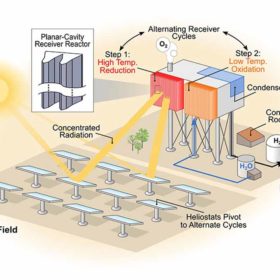
Perovskites studied as potential material to produce renewable hydrogen
National Renewable Energy Laboratory researchers are looking at perovskite materials for a solar-fuel platform that supports the US Department of Energy’s HydroGEN project.
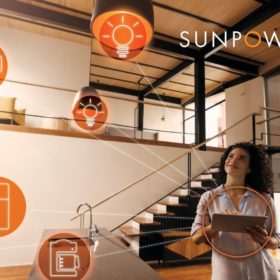
Maxeon unveils home energy management system
Maxeon Solar Technologies has released an integrated home energy management system to engage with solar PV, batteries, heating, cooling, and appliances.

US government announces $3.1 billion of funding for battery manufacturing, processing, recycling
$3.1 billion is available to increase production of American-made batteries, with a separate $60 million to support second-life applications for used EV batteries, along with development of processes for recycling materials back into the battery supply chain.
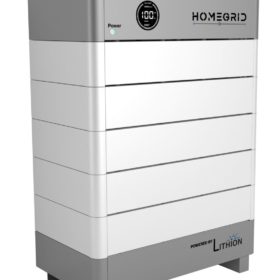
Stackable home battery with 9.6 kWh to 38.4 kWh of capacity
Lithion’s Stack’d Series LFP batteries are modular and can be scaled in 4.8 kWh increments, from 9.6 kWh to 38.4 kWh.
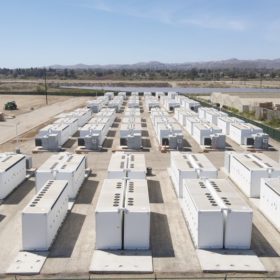
India’s NTPC tenders 250 MW/500 MWh energy storage project
A unit of India’s NTPC has opened global bids to develop 250 MW/500 MWh of battery energy storage capacity in the Indian state of Rajasthan. The proposed plants will need to have enough capacity to store two hours of electricity. Bidding closes on June 6.
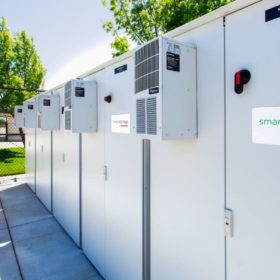
US lab reveals top findings for hybrid solar, storage plants
US government researchers have collected 10 observations from recent research papers that look at solar- or wind-plus-storage power plants in the United States.
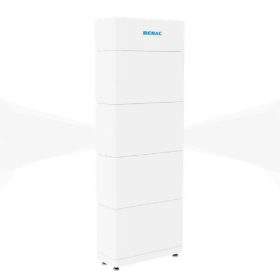
Renac Power unveils high-voltage residential battery
Renac Power’s new plug-and-play battery has a storage capacity of 3.74 kWh, but it can be enhanced in series with up to five batteries to 18.7 kWh. It has a nominal voltage of 96 V and a voltage range of 81 V to 108 V.
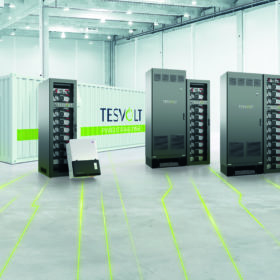
Tesvolt unveils new battery line for commercial, industrial applications
Tesvolt’s new E Series includes the TS-I HV 80 battery and the TS-I HV 100 battery, with storage capacities of 80 kWh and 90 kWh, respectively. Both of the devices have efficiencies of up to 98%.
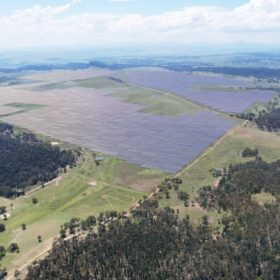
Maoneng reveals plans for 950 MW solar-battery project in Australia
Maoneng has unveiled ambitious plans to build a giant solar farm and battery energy storage facility in Australia.
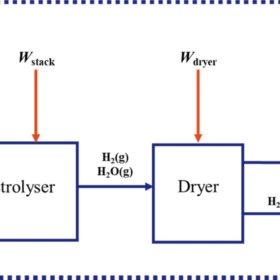
The Hydrogen Stream: High-pressure PEMEL electrolyzers for lower hydrogen costs
Elsewhere, Lotte Chemical and Air Liquid Korea will establish a joint venture to build a hydrogen supply chain in South Korea and the US Department’s Loan Programs Office (LPO) offered a conditional commitment for a US$504.4M loan guarantee to the Advanced Clean Energy Storage Project in Utah, which combines alkaline electrolysis with salt cavern storage for grid scale energy conversion and storage using hydrogen as the energy carrier.
