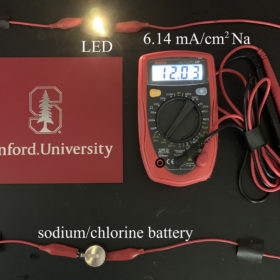
New alkali metal-chlorine battery promises 6x energy density
Scientists in the U.S. discovered a promising new battery chemistry based on chlorine and table salt. Batteries based on this chemistry can achieve at least six times the energy density of today’s lithium-ion batteries, according to the group that created it. The prototype battery could already be suitable for small devices such as hearing aids, and with further work could be scaled up to larger applications.
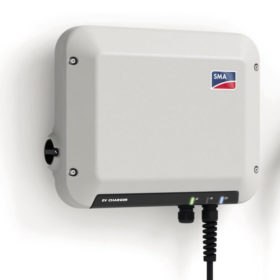
The weekend read: Electromobility meets battery storage
Now in its 10th year, pv magazine Deutschland has once again conducted its market overview of residential battery storage products. As the leading global distributed storage market, technology and application trends from Germany, including the shift to EV-charging integration, are enlightening for market participants throughout the world. Interestingly, price declines remain slow.

Cheapest long-duration storage for systems with high renewables
National Renewable Energy Laboratory researchers have studied which tech offers the lowest levelized cost of energy to provide the US Western Interconnection grid with electricity when wind and solar are not available. They assumed 85% renewables penetration and determined that geologic hydrogen storage and natural gas combined-cycle plants with carbon capture storage are the cheapest options for 120-hour discharge applications.
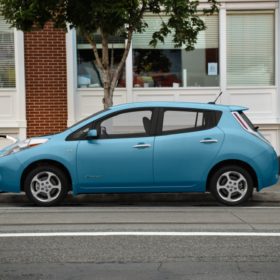
US company using 3D printers to make solid-state battery tech for EVs
California-based Sakuú Corp. has started work on a 2.5 MWh per year pilot facility to produce 3D-printed solid-state battery tech.
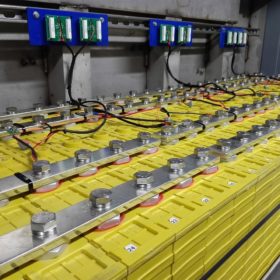
Allox Minerals wants to scale up lithium battery material production
The Indian natural resources company is looking to scale up lithium titanium oxide (LTO) anode and lithium ferrophosphate (LFP) cathode material production for electric vehicle batteries as demand rises. It produces these materials using the economical method developed by the International Advanced Research Centre for Powder Metallurgy & New Materials (ARCI). The company is also keen on forward integration up to battery assembly.
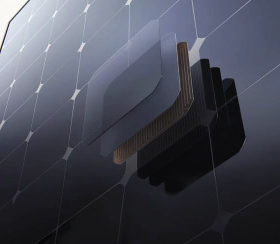
Blackouts and high utility prices are driving solar and storage adoption in the US, SunPower survey says
The survey of 1,500 homeowners shed light on the home solar energy experience and motivating factors behind solar purchases.
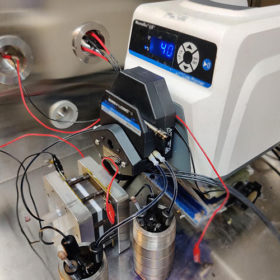
Redox flow battery retains more than 90% of capacity over 6,000 cycles via new catholyte
The battery was built with a new catholyte and a symmetry-breaking strategy, which consists of changing the symmetry of the redox-active organic molecules instead of using the common approach of attaching a hydrophilic functional group.
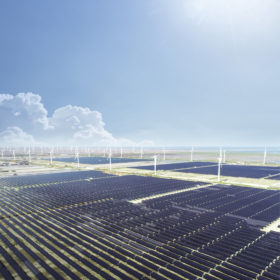
The weekend read: China’s battery storage awakening
China’s efforts to shift electricity generation from a coal-dominated system to a greener mix of renewables is not only centered on wind, solar and other technologies – the country is also rapidly pursuing energy storage. Vincent Shaw reports from Shanghai.
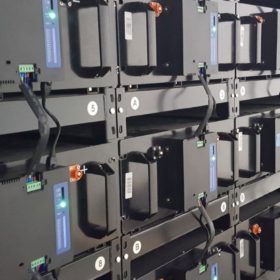
Energy storage appears to be fully charged for exponential growth
Lithium-based energy storage volumes are expected to grow by multiple orders of magnitude in the coming years, with a 1,000% capacity increase by 2023.
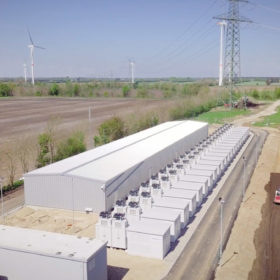
Grid-scale storage potential in India
A new study provides a novel assessment of grid-scale storage deployment in India, both in the near term and the long term. Scenario-based capacity expansion modeling shows when, where and how much storage can be cost-effectively deployed in India through 2050.
