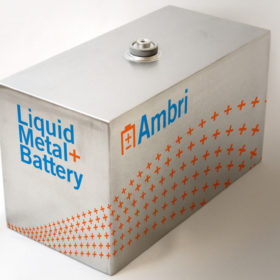
US start-up secures $144 million for liquid metal battery commercialization
Ambri plans to commercialize its calcium-antimony liquid metal battery chemistry and open manufacturing facilities to deliver projects in 2023 and beyond.
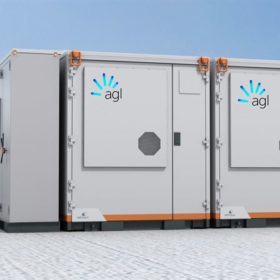
World’s largest ‘grid-forming’ battery to begin construction in Australia
Australia’s AGL Energy will soon own the world’s largest ‘grid-forming’ battery, with construction to begin on its new 250 MW/250 MWh project later this year on Torrens Island, South Australia. Finland’s Wärtsilä will supply the battery, while Germany’s SMA will provide inverters.
Lithium-ion technology to lead the Indian storage market by 2030
A new report predicts lithium-ion technology to lead the Indian battery energy storage systems market by 2030 as prices for lithium iron phosphate (LFP) and lithium nickel-cobalt-manganese (NCM) battery technologies fall.
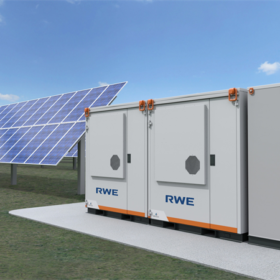
Data confirm the rise of solar-plus-storage hybrids across the U.S. grid
Battery prices are falling, and renewable energy generation continues to expand, leading power plant developers to co-locate energy storage along with power generation assets.
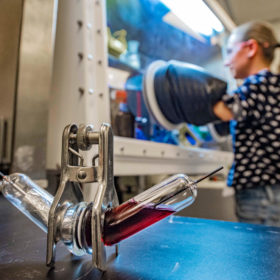
Sandia researchers develop new grid-scale energy storage battery
The battery operates at 230 degrees Fahrenheit, opening what researchers said could be “a whole cascading cost savings” including everything from less expensive materials to less insulation.
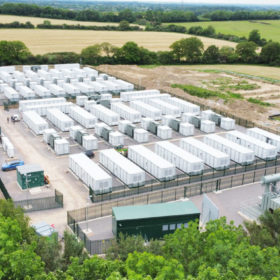
Sungrow switches on 100 MW/100 MWh storage system in the UK
One of the largest storage facilities in wider Europe has come online. In the future, it will provide network services and help prevent power outages in the U.K., such as the one that occurred in August 2019.

Italy notches 212 MW/333 MWh of distributed storage capacity, adding 22.5MW/37.9 MWh in Q1 2021
The country added around 22.5 MW/37.9 MWh of new, small-sized storage capacity in the first quarter of 2021.
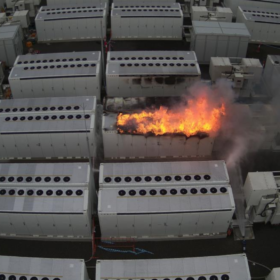
Fire at Australian big battery
Speculation will be rife as to the cause of the fire which destroyed one Tesla Megapack and damaged another in Moorabool on Friday. Investigators are waiting until the site is deemed safe to begin their forensic examination.

Bidders plan to use ‘brown power’ to balance intermittency of solar in Singapore’s clean power tender
Solar developer NEFIN and electric company Tuas Power have tabled a joint bid to secure the rights to supply 100 MWh of ‘zero-carbon electricity’ from Malaysia to Singapore and said they initially intend to use “brown power” to secure supply during non-solar-generation hours.
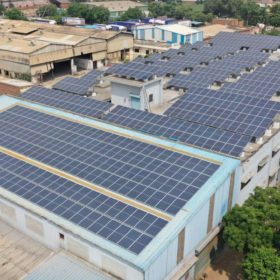
Commercial and industrial rooftops in India could deploy 1,875 MW of solar in 2021
According to a new report, India’s commercial and industrial sectors will increase their rooftop solar deployments by 47% year-on-year, with bifacials and large-size high-wattage modules offering cost-effective support for reducing electricity costs.
