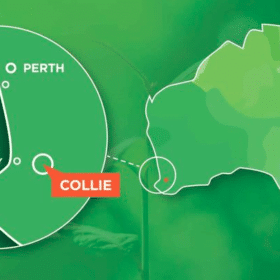
Australian startup aims to become one of the first first Li-ion anode producer outside China
A handful of companies are challenging Chinese control of a core material in lithium-ion battery production, before the electrification of transport truly kicks off the global battery boom. International Graphite, a Perth-based startup at the forefront of this effort, recently spoke to pv magazine Australia about the surprisingly collaborative race to feed global demand.
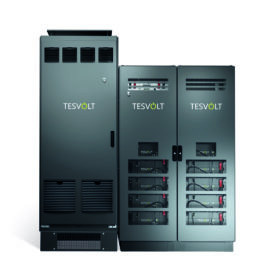
Tesvolt launches commercial battery with inverter and energy management system
According to the German manufacturer, the TS-I HV 80 can combine a wide variety of applications such as optimized self-consumption and intelligent peak load capping.
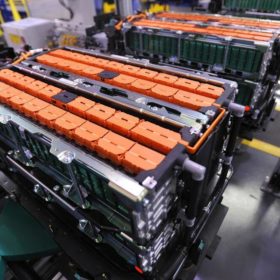
Novel nanomaterial to replace graphite in lithium-ion batteries
Porous nanostructured microspheres made of copper, iron, and iron oxide were used by an international research team as negative anode material in lithium-ion batteries. The new technique is claimed to provide three times more capacity than batteries based on graphite anodes.

NREL looks at opportunities in lithium-ion battery recycling
U.S. scientists assessed the reuse and recycling of large-format lithium-ion batteries for electric vehicles and energy storage systems and found there is plenty of room for improvement.
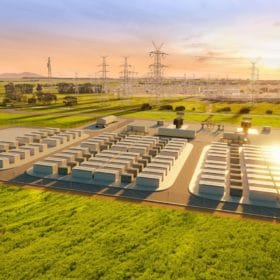
Neoen completes financing for 300 MW storage facility in Australia
Construction has commenced on the 300 MW / 450 MWh Victoria Big Battery storage facility near Geelong after the Clean Energy Finance Corporation (CEFC) provided French renewable energy developer Neoen with a $160 million funding injection.

Trina Solar enters storage business
The module manufacturer’s new storage unit, Trina Storage, aims to create innovative solutions for the combination of photovoltaics and storage, grid services and other applications.

Northvolt plans to expand gigafactory in Poland
The Northvolt manufacturing facility in Gdansk should become Europe’s largest factory for energy storage solutions. The production is scheduled to begin in 2022 with an annual capacity of 5 GWh. The company wants to expand it to 12 GWh.
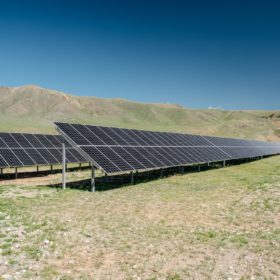
Geo-referenced approach to identify communities that can afford PV mini-grids
The novel methodology can be used for 71 countries located across ‘sun belt’ areas of east Asia, South Asia, and sub-Saharan Africa. The model relies on 2014 and 2015 geo-referenced datasets in various formats and spatial resolutions, as well as on a population dataset based on global human settlements (GHSL) and World Bank national-level estimates of electrification.

New method to produce silicon anodes for lithium-ion batteries
Scientists in Sweden developed a new aerogel process to manufacture silicon anodes for lithium-ion batteries, promising to offer batteries with greatly increased capacity compared to those on sale today. By growing nanometer-sized particles of silicon onto graphite, the group was able to demonstrate a device that overcomes many of the challenges common to silicon as anode material. While there are still challenges in terms of stability and capacity retention, the approach could ultimately yield low-cost, large-scale production processes.
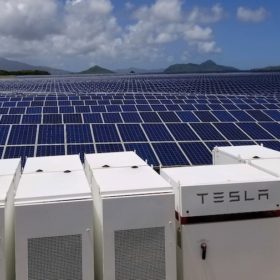
US set to lead utility-scale storage market in record year
Solar+storage installations are emerging as a major growth driver for the overall U.S. market, according to a new report from IHS Markit.
