
Building-integrated PV in the Netherlands
The latest report from the International Energy Agency Photovoltaic Power Systems Programme (IEA-PVPS) says that building-integrated photovoltaics (BIPV) could be key to help decarbonize cities in the Netherlands, but it warns that the needs of the solar and construction sector must be bridged.

ClearVue integrated solar window tech cracks Middle East construction market
Smart building materials company ClearVue Technologies has cracked the Middle East and Indian construction markets after signing a five-year agreement with Qatar’s largest glass and façade manufacturer.
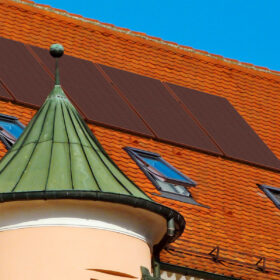
Sonnenkraft unveils 400 W TOPCon panel for terracotta red rooftops
Austrian manufacturer Sonnenkraft has developed a terracotta glass-glass module that aesthetically blends in with tiled roofs. It has an efficiency rating of 20.02%.
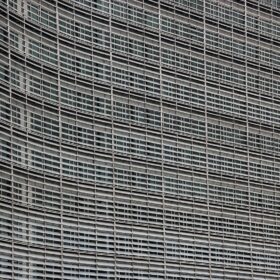
Dynamic photovoltaic blinds for glaze-façade buildings
Scientists from China have built photovoltaic blinds that can reportedly regulate thermal load, daylight penetration, and energy generation in high-rise buildings with glazed facades. Their creators claim the blinds offer superior architectural aesthetics and notable energy-saving potential.

Workflow for integration of BIPV in historical buildings
Italian researchers have outlined a four-step method to assess the technical feasibility of building-integrated PV (BIPV) projects in historical buildings. They applied the proposed approach to a courtyard building from the 16th century in the historical Italian town of Marcianise.
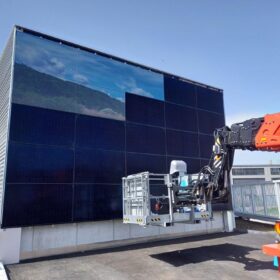
Swiss startup develops adhesive film to create PV billboards
A Swiss company has developed adhesive film that can be applied on solar panels to make them more aesthetically appealing. The film reduces electricity production by between 10% and 30%, but income from advertising could offset such losses.
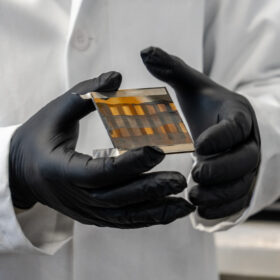
Commercial perovskites imminent
Andries Wantenaar, a solar analyst at Rethink Energy, explains why he sees a bright future for perovskite PV cells, with technological advancements and major R&D investment paving the way for revolutionary change.

Swiss 3S introduces new half-cell BIPV modules
Swiss 3S, the Switzerland-based manufacturer, is offering the new half-cell BIPV module in four sizes, ranging from 24 half-cells to 48 half-cells. The rated output is up to 225 W.

The impact of BIPV in high rise buildings
Scientists from Spain have outlined several scenarios for developing building-integrated PV solutions in a case study building in Palma de Mallorca. Their economic analysis stressed the importance of electricity pricing schemes for the viability of BIPV projects in the Mediterranean area.
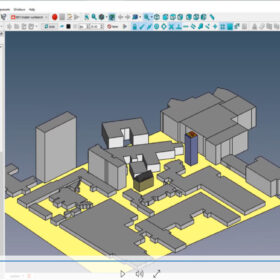
New software tool unlocks BIPV design
RMIT University in Australia has developed new software that integrates product, regulation, technical, economic, and construction data. It helps architects and engineers to estimate the cost of building-integrated photovoltaics (BIPV) during the conceptual design phase.
