
Large-size solar tile from Spain
The product is available both with monocrystalline and CIGS solar cells and is claimed to be the world’s largest solar tile with dimensions of 457 x 510 mm.

Fraunhofer ISE develops technique to produce glowing colored solar modules
The German research institute has proposed a technique based on the surface structure of the wings of the morpho butterfly to produce colored BIPV panels for facades and rooftops. The process is claimed to make it possible to color the modules with an optical effect and not with color pigments, which reduce their efficiency.

BIPV windows viable only if they add soft value to buildings
Solar windows are only likely to reach commercial maturity when manufacturers consider how they can add “soft” value to buildings, as required by the construction industry. In order to increase this value, increasing their conversion efficiency will become less important, while understanding how to blend them into the existing value chain in the real estate business will be crucial.
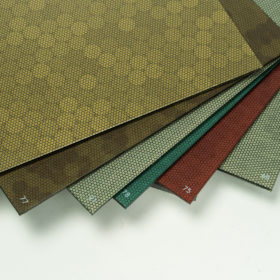
Colored facade solar panels with 13.8% efficiency
Dutch startup Solarix has developed a new line of facade solar panels featuring 13.8% efficiency and output ranging from 110 to 180 W, depending on the module size and color. The panels can be bolted or glued onto aluminum mounting systems applied to facades.
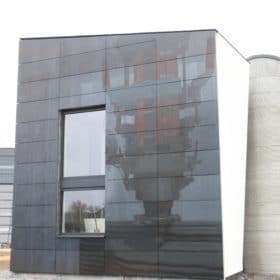
Solar facade for 3D-printed concrete house
Taiwan-based Heliartec has deployed a solar facade on a 3D-printed concrete house in Belgium. It said it installed the solar facade with the “circular construction” philosophy in mind.

Ever heard of photovoltatronics, the new frontier of solar in urban environments?
Scientists in the Netherlands are planning to build intelligent PV devices for energy and information applications. Their intention is to make this approach a new field of PV research, whose ultimate goal is enabling solar cells to communicate with each other and with other devices, ensuring that all the generated energy ends up exactly where it’s needed, especially in the urban environment.
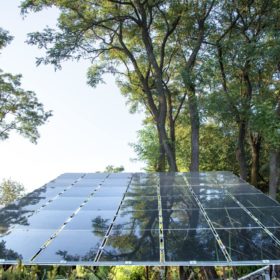
BIPV module with novel encapsulation design
Researchers at the University of Malaga say they have developed a panel for building-integrated photovoltaics that improves light absorption without losing efficiency and durability.

New solar window tech from Australian startup
Australia’s ClearVue wants to push ahead with the development of its transparent solar glass technology. Construction is now beginning on a commercial-scale trial project.

PPA for PV facade in Germany
A 50 kW PV system is being built on the facade of a radiology center near Marburg’s main train station. The Marburg municipal utilities and the Sonneninitiative association have concluded a PPA that ensures the long-term financing of the project.

France to support BIPV solar tiles with additional incentives
Barbara Pompili, the French minister of ecological transition, recently announced new bonus incentives for BIPV projects during a visit to a Sunstyle factory that aims to produce 1 GW of “Made in France” solar tiles by 2025.
