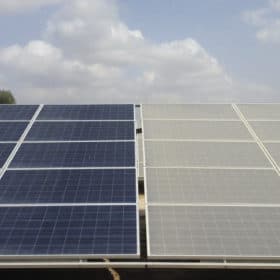
Wind tunnel tests show spacing between panels is key to reduce soiling
Scientists have placed four PV panels in a 21-meter wind tunnel and run different tests regarding tilt angles, mounting height, spacing, and incoming flow direction. They found that when the spacing between panels exceeds twice the panel height, the mutual influence on dust deposition becomes negligible.
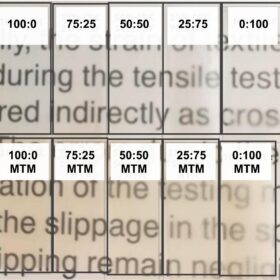
Researchers develop high transparency nanocellulose film for photovoltaics, packaging
The nanocellulose film can be used for light management as its light scattering is adjustable. It also exhibits a transmittance of over 80% at 550 nm.
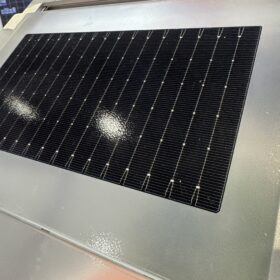
Daytime radiative cooling tech for solar panels
A Chinese research group has created a new radiative cooling technology for photovoltaic devices. It consists of a chamber made of ethylene-tetrafluoroethylene and polydimethylsiloxane that, when placed above the solar cells, can reportedly achieve an average cooling power of approximately 40 W/m2.
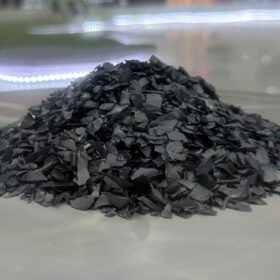
China reviewing anti-dumping duties on solar-grade silicon from US, South Korea
The Chinese government says it will review 2014 anti-dumping duties on US and South Korean polysilicon imports, and will maintain them during its investigation, which was requested by 13 Chinese manufacturers.
Chinese PV Industry Brief: Aiko Solar starts making back contact PV panels
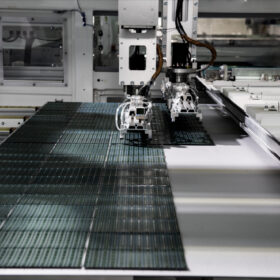
Aiko Solar has started production at its Jinan factory, its third facility for n-type all-back-contact solar modules. The plant is designed for 30 GW of solar cell and panel capacity, with the first 10 GW phase set to reach full output by late 2025.
Maltese scientists design offshore virtual power plant integrating PV, wind, storage
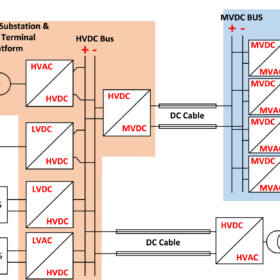
The proposed virtual power plant (VPP) integrates a platform-to-ship (P2S) setup to electrify anchored and bunkering ships, while also providing surplus electricity to the country’s grid. The system was designed to operate through a 200 MW floating wind farm and a 300 MW floating PV plant, with battery and compressed air systmes being used for energy storage.

Chinese PV Industry Brief: Maxeon, Tongwei reach patent dispute settlement
Maxeon Solar Technologies and Tongwei have settled a global patent dispute over shingled solar cell and module technologies, ending litigation initiated by Maxeon in Germany in 2023.

A closer look at China’s Great Solar Wall
The US National Aeronautics and Space Administration (NASA) has published aerial images of the Great Solar Wall, China’s largest renewable energy project. The installation is expected to reach 100 GW of capacity by 2030.
Controlling water-to-water CO2 heat pump for optimal coefficient of performance
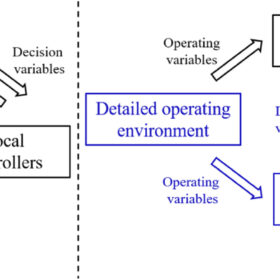
Scientists have designed a novel control approach for water-to-water heat pumps that use carbon dioxide. They relied on a virtual heat pump for their tests. The coefficient of performance (COE) improved by up to 14.6%.
Scientists develop thermal model for floating solar with 15.45% efficiency
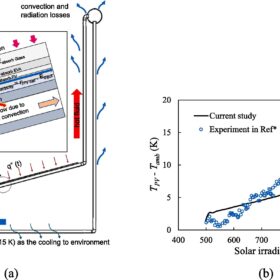
Scientists have developed a multi-physics thermal model for panels with a natural convection cooling loop and tested it against experimental data. They have also experimented with varying the coolant channel thickness and different coolants. The highest measured electrical efficiency reached 15.45%.
