
Atess Power releases 100 kW/150 kW commercial inverters
Atess Power says it has developed 100 kW/150 kW commercial inverters with two maximum power point trackers (MPPTs), a 600 V to 900 V battery voltage range, and 10 milliseconds on/off grid transfer capability.

Sineng Electric turns on 150 MW/300 MWh of storage in China
Sineng Electric has switched on a 150 MW/300 MWh standalone energy storage station in Guangxi, China, featuring battery energy storage system (BESS) containers, a central power conversion system (PCS), and a booster station.

PV module fault detection tech based on deep learning of electroluminescence
The novel technique is based on the VarifocalNet deep-learning object detection framework, which was reportedly tweaked to achieve quicker and more accurate results. Compared to other such methods, the new approach was found to be the most accurate and third quickest.

Scientists classify weather types based on extreme photovoltaic output events
Scientists used a year’s worth of data from East China to analyze what weather conditions affect abnormal, high, and low PV output days. They also constructed a simple extreme output prediction model and examined the atmospheric circulation anomalies corresponding to extreme output events.
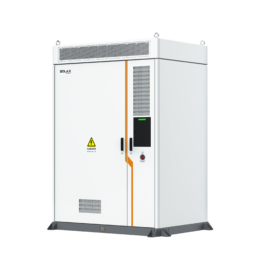
SolaX releases new 215 kWh storage system
SolaX has released a new 215 kWh storage system featuring 280 Ah lithium iron phosphate (LFP) battery cells, with 100 kW of rated AC power and a maximum efficiency of 98%.
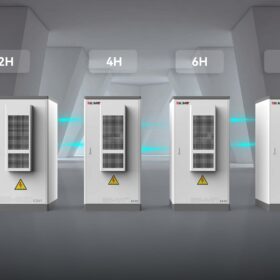
Bslbatt launches storage system for C&I applications
Bslbatt says it has developed a new storage system for commercial and industrial applications, offering up to 241 kWh of capacity and supporting 100 kW or 125 kW of solar.

Dyness launches new C&I battery
Dyness has developed a new small-scale storage system in 71 kWh, 86 kWh, and 100 kWh variants for commercial and industrial (C&I) applications. The Chinese manufacturer says the product is based on lithium iron phosphate (LFP) cells.

Radiative cooling tech based on polydimethylsiloxane film increases PV module generation by up to 3.72%
Scientists in China have proposed to use polydimethylsiloxane films doped with soda glass to reduce solar module temperature. The coating achieved solar transmittance of 94.8% and sky window emissivity of 95.3%.
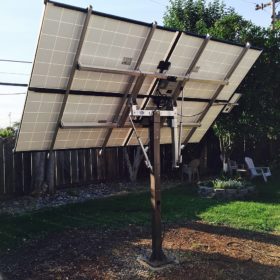
Dual-axis solar tracker based on UV, MEMS sensors
Researchers have designed a new tracking system that utilizes an arithmetic optimization-based PID controller. The proposed tracker uses two different sensor types – a UV sensor and a micro-electromechanical solar (MEMS) sensor. The first one calculates the intensity of UV radiation received from the sun, and the second one forecasts the sun’s path across the sky.

JA Solar sues rival module manufacturer over TOPCon patent infringement
The Shanghai-based solar development company has filed two complaints with the Munich and Hamburg local divisions of the Unified Patent Court.
