
US startup begins manufacturing grid-scale flywheel ESS
SOSV-backed Qnetic is aiming to raise $20 million in 2026. Over the next two years it will work with the National Lab of the Rockies and other partners on field testing and validating its technology across multiple use cases.
UK defining stronger energy cybersecurity rules after Poland attack
The UK government is proposing stronger cybersecurity rules for electricity and gas sectors, prompted by recent attacks on European energy infrastructure, including a recent incident involving solar power plants in Poland. The plans would extend baseline cybersecurity requirements to all licensed energy organizations and could also adjust compliance thresholds under NIS regulations.
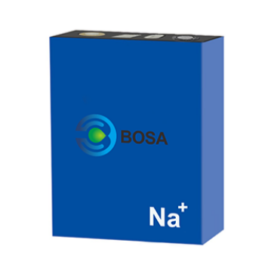
Sodium-ion cells launched for energy storage by another Chinese mid-tier battery company
Bosa Energy in Hubei, China, has launched sodium-ions cells for stationary energy storage, with a volumetric energy density of 206 Wh/L

What are the selling points of marine energy?
Marine energy is renewable and generally predictable. It could thus compensate for the unplanned intermittency of solar and wind generation, its proponents argue. But several challenges still need to be overcome for the energy to become widely used.
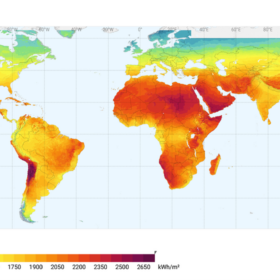
Solar generation performance with regional weather conditions deviating from long-term averages
Global solar PV continues its rapid growth, reaching around 650 GW in 2025, with record solar irradiation extremes across regions such as East Asia, India, and Latin America. With current production capacity and emerging technologies like perovskite-silicon tandem modules, PV is poised to surpass all other electricity generation technologies combined by the end of the decade.
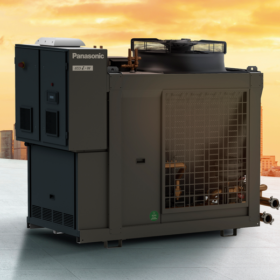
Panasonic debuts propane heat pump for light industrial, multi-residential buildings
Designed for commercial and multi-residential buildings, the Aqua‑G EVO heat pump can replace gas boilers, cascade up to eight units, and integrate with Panasonic’s complete HVAC ecosystem.
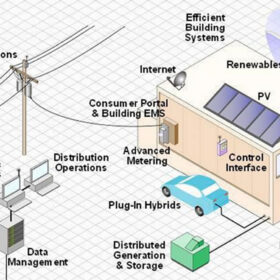
Industry 4.0 technologies raise cyber risks for smart renewables grids
An international research team developed a multi-stage intrusion detection system that uses supervised and unsupervised AI techniques to detect and mitigate cyber threats in smart renewable energy grids. The system can reportedly achieve high accuracy, low false positives, and real-time detection, outperforming traditional intrusion detection system models.

Germany classifies cybersecurity threats for energy infrastructure
Germany’s Federal Network Agency will use a new, structured framework developed by Fraunhofer IOSB-AST to classify cybersecurity incidents in the energy sector. The methodology enables comprehensive risk assessments, from initial reports to systemic and economic impacts, supporting consistent evaluation across the entire energy value chain.
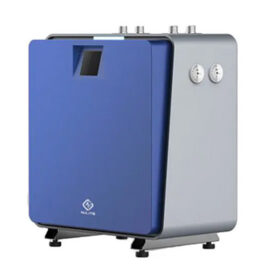
Nulite launches PV-driven residential heat pump
The Chinese manufacturer has unveiled a hybrid photovoltaic–geothermal heat pump system that uses solar electricity to directly power the unit, boosting efficiency and self-consumption. The 8–112 kW ground- and water-source system delivers heating, cooling, and domestic hot water with coefficients of performance often exceeding 4–5, while smart controls and the ground loop act as a thermal battery to optimize year-round performance.
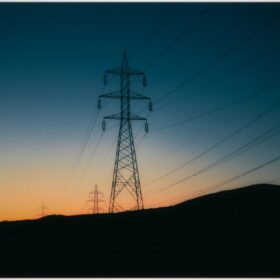
Spain enables 50-plus renewable plants for real-time voltage control
Spain’s grid operator Red Eléctrica and regulator CNMC have launched real-time voltage control services, allowing renewable energy installations to provide dynamic grid support under a new regulatory framework.
