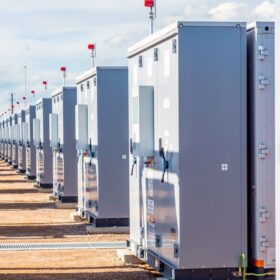
AGL goes live with second biggest battery in Australia
Australian energy giant AGL has officially opened its first operational grid-scale battery – the 250 MW/250 MWh facility at its Torrens Island power station site in South Australia.
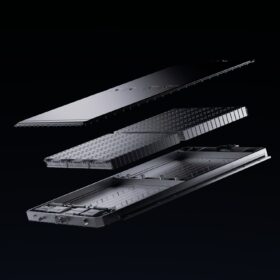
CATL unveils EV battery enabling a 400 km driving range on a 10 minute charge
Chinese battery industry heavyweight Contemporary Amperex Technology (CATL) announced a new electric vehicle battery that reportedly enables long-range driving on a fast, ten-minute charge. It expects mass production to begin by the end of this year, and vehicles equipped with the battery to be available in the first quarter of 2024.

South Korea opens tender for 65 MW/260 MWh of battery storage
The South Korean authorities have kicked off a tender for 65 MW/260 MWh of storage capacity, in support of extensive battery systems on Jeju Island.
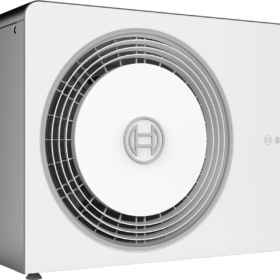
Bosch sells new propane heat pumps with PV packages
Bosch is currently selling the new heat pumps in the DACH markets and is planning to expand sales in other European markets in September. The new products use propane as the refrigerant and integrated sound diffusers. The manufacturer is also offering a power meter/sensor enabling the heat pumps to work with any existing PV system and battery storage solution at home.
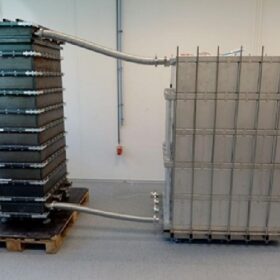
Solar-driven heat battery for residential applications
Developed by scientists in the Netherlands, the heat battery prototype consists of a storage module based on potassium carbonate and an electricity-driven mechanical system that maintains continuous charging or discharging powers. Through a series of simulations, the research group found that the device can significantly reduce a dwelling’s electricity consumption for heating.
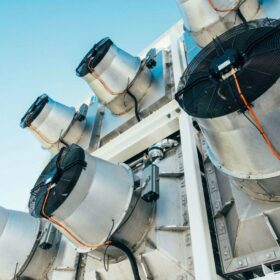
California’s first full-scale direct air capture hub awarded $11.8 million
The hub could potentially remove more than 1 million metric tons of carbon dioxide every year, or the equivalent of eliminating 220,000 gasoline vehicles on the road annually.
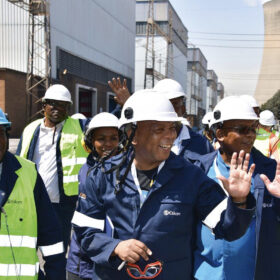
Weekend Read: Chaotic leadership leaves South Africans in the dark
Extensive load-shedding, lack of grid capacity, failing coal-fired power stations, lack of progress in clean power procurement, and even vandalism have prompted various South African government departments to take renewables generation into their own hands, seemingly without any overarching plan, as Bryan Groenendaal reports.
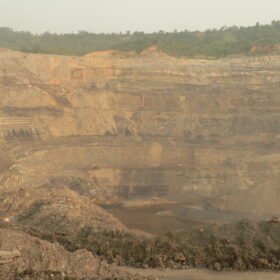
Combining PV with pumped hydro storage in open-cast coal mines
Indian scientists have suggested building pumped-hydro storage systems connected to solar plants using mines as the lower reservoir and nearby rivers as the upper reservoir. They claim that the proposed combination may reach a levelized cost of energy of $0.2693/kWh.
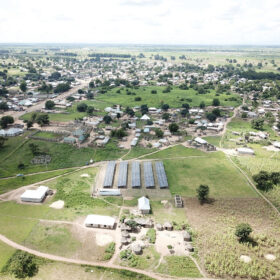
Nigeria’s PV potential
Everoze Partner Abdul Sotayo highlights some of the issues that continue to hold back progress on clean energy in Nigeria, where energy poverty remains a problem, despite the nation’s vast solar potential.
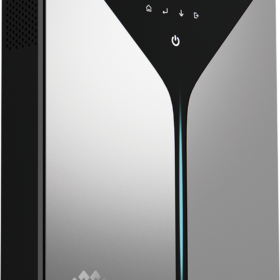
Biwatt unveils new residential sodium-ion batteries
Biwatt Power, a Chinese manufacturer, has developed new residential sodium-ion batteries with an efficiency rate of 97% and a projected lifespan of more than 3,000 cycles.
