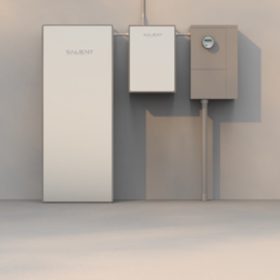
It could be simple to smarten up your inverter
With AI-enabled devices able to take the money-saving efficiency of lithium batteries to an incredibly granular level, research by Inion Software shows simple changes by inverter manufacturers would enable devices of almost any age to be “smartened up.”

Giant battery goes online in China
Sineng Electric has switched on a 400 MW/800 MWh storage facility in China’s Shandong province. The project features the company’s 3.15 MW turnkey battery stations.
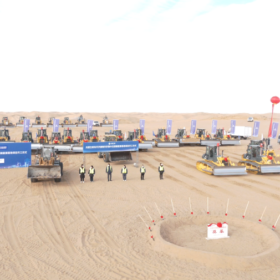
Construction begins on massive solar-plus-storage project in China
China’s Three Gorges New Energy has started building the first 1 GW phase of solar-plus-storage capacity for a planned 16 GW mega-project in Inner Mongolia’s Kubuqi Desert. Upon completion, the massive installation will include 8 GW of solar, 4 GW of wind, and 4 GW of upgraded coal capacity.
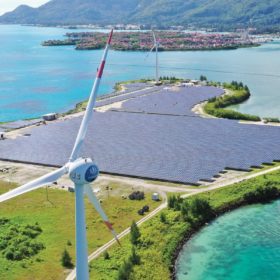
Masdar switches on 5 MW solar plant in Seychelles
Masdar said it has started operating the 5 MW Ile de Romainville PV project in the Seychelles. The installation is backed by 3.3 MWh of storage capacity.

China connects 220 MW/440 MWh battery to grid
Robestec has connected a 220 MW/440 MW battery storage system to the grid in Ningxia, China. It is reportedly China’s largest standalone energy storage station, and uses lithium iron phosphate (LFP) batteries from Hithium Energy Storage.

Belgium’s Flanders region to slash solar, storage premium in 2023
The Flemish government will halve the solar panels premium from a maximum of €1,500 ($1,594) in 2022 to €750 from Jan. 1, 2023. It will also end the home battery premium earlier than initially announced, from April 2023. The premium for heat pump boilers, on the other hand, will be retroactively doubled.
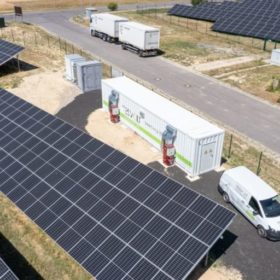
Germany allocates 104 MW of rooftop solar in unsubscribed auction
Germany’s latest solar auction allocated 104 MW of solar for buildings and noise barriers on motorways. The tender volume was 202 MW which went partly unsubscribed. The volume-weighted average award value fell slightly to €0.0874 ($0.093)/kWh.
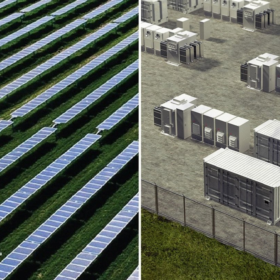
Mitsubishi to supply 150 MW/600 MWh storage for US solar projects
Mitsubishi Power Americas will supply batteries for the development of three battery energy storage systems in the southeast US. The three hybrid projects are being developed by Origis Energy as part of 1.5 GW of operational and contracted assets in the region.
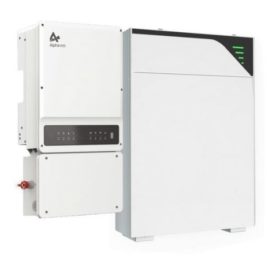
Emporia unveils residential battery inverter solution
US-based Emporia Energy has developed a home battery system with an inverter and transformer. The lithium iron phosphate (LFP) battery has a storage capacity of 8.2 kWh, and up to six modules can be combined for up to 49 kWh of energy storage. The inverters come in 7.6 kW or 9.6 kW versions.
Next year will bring micro and mega grids
This year has witnessed upheaval in the global energy system as inflation, geopolitical conflict, and the reality of a changing climate continue to drive the transition to cleaner energy. Next year, these trends are likely to continue and accelerate as renewable energy adoption continues to grow and the inextricable link between energy security and national security is increasingly recognized. Alan Greenshields, of US-based iron-salt flow battery maker ESS Inc, offers four predictions for 2023.
