
Ireland cites need for 1.9 GW more solar this decade to stay on track for net zero
Although wind power dominates the renewables scene in the Republic of Ireland and the North – and even natural gas has a bigger role to play – the grid companies of the neighbors have revised up their estimates of how much solar will be needed, after talking to the public and industry.
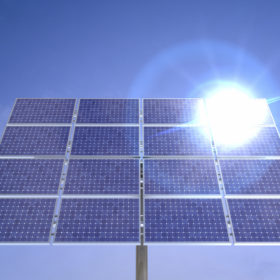
A hybrid wind-solar-biogas sytem design including battery and thermal storage from PV modules’ excess heat
Tested in an off-grid location in India, the proposed approach includes the use of thermal storage from PV modules’ excess heat for space and water heating. The optimum configuration for the system was given by the combination of a 224 kW PV system equipped with a phase change material, a 206 kW wind turbine, a 420 kW biogas generator, a 633 Ah battery, and a 170 kW converter.

Malawi’s first grid scale solar project will shortly be followed by a second
The 20 MW Golomoti PV project will include 10 MWh of lithium-ion battery storage in a first for the sub-Saharan African market, according to its London-based joint developer.

New renewables developer wants 2.7 GW of European projects on the books next year
Aukera Energy, launched as a brand today but staffed by clean energy professionals who have worked with backer AtlasInvest for at least a decade, says it already has more than 1 GW of solar and wind capacity under development in Italy, Poland and the U.K. and wants to almost treble the scale of that portfolio within 12 months.
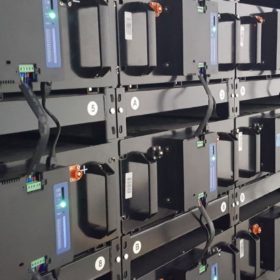
The energy storage decade has arrived, says BNEF
BloombergNEF says falling battery costs and “surging” renewables penetration make energy storage a “compelling flexible resource in many power systems.”
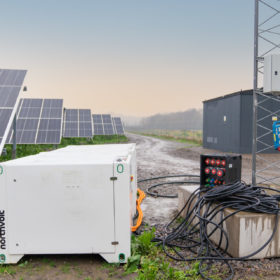
Mobile storage for diesel-free solar plant construction
A 245 kWh mobile storage solution from Swedish manufacturer Northvolt was connected to an operational section of a PV plant under construction in Sweden to replace diesel power generators. According to the project developer, around 500 kW of the operational capacity of the solar park will be enough to power the site’s operations through the battery.
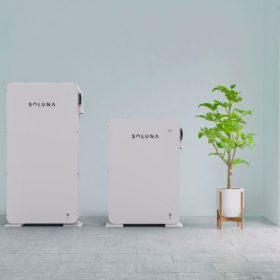
Soluna unveils 20kWh battery for residential and commercial applications
The Chinese manufacturer says the battery has a depth of discharge of 95%. It will be available for sale starting from Q1 2022.
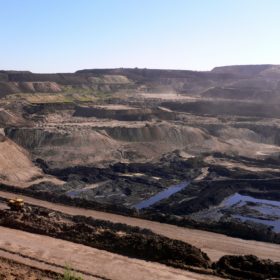
How to convert coal mine goaves into pumped hydro storage facilities
According to Chinese researchers, using abandoned coal mine goaves for pumped hydro facilities in combination with large scale solar and wind is not only technically feasible but can also provide an efficiency of 82.8% in yearly operation cases. They applied the model to wind and solar-rich northwestern and southwestern China.
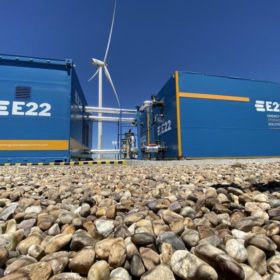
Australian miner tests vanadium redox flow battery technology
Australian miner IGO is building upon its renewable energy options at its Nova nickel operation after signing an agreement with Perth-based energy storage company VSUN Energy to test a hybrid standalone power system backed by a vanadium redox flow battery.
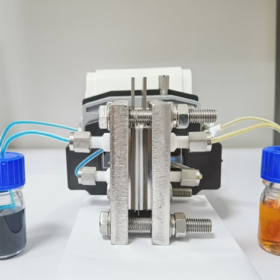
Redox flow battery with capacity retention of 99.98% per cycle
The battery was fabricated by Chinese scientists with a low-cost electrolyte made of a derivative of TEMPO, which is a well-known electroactive aminoxyl radical used with several applications in chemistry and biochemistry. According to the researchers, the battery shows high redox potential and is crossover-free.
