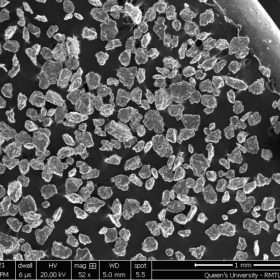
The Hydrogen Stream: New magnesium-based composite for hydrogen storage and a big push from South Korea
Researchers at Canadian Nuclear Laboratories (CNL) identified a new magnesium-based alloy that could be used for hydrogen storage. Furthermore, Hyundai Mobis announced a $1.1 billion (€0.95 billion) investment in two new fuel cell plants in South Korea, while South Korea’s SK Group formed a joint venture with US hydrogen solutions company Plug Power to develop green hydrogen across several Asian countries.
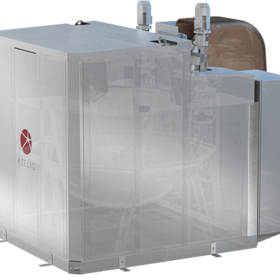
Azelio launches electro-thermal storage system for commercial applications
Developed by Swedish manufacturer Azelio, the system stores renewable energy in recycled aluminum and has an electrical and thermal energy output, with a total efficiency of 90 %. One unit’s storage capacity reaches 165 kWh of electrical output and on top of that thermal energy between 55-65 degrees Celsius. Its modular configuration allows the deployment of projects with a capacity of up to 100 MW.

Australian developer steps up plans for 400 MW pumped hydro project
BE Power will continue to progress plans to construct a 400 MW pumped hydro storage project near Toowoomba in southeast Queensland after the local government authority gave the project its tick of approval.
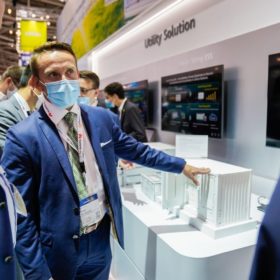
Intersolar Europe day 2: There’s still plenty of buzz here in Munich
Welcome back to the second day of Intersolar Europe! Stay tuned as the pv magazine team brings you the latest solar PV and energy storage news from day 2 of this year’s Intersolar Europe.
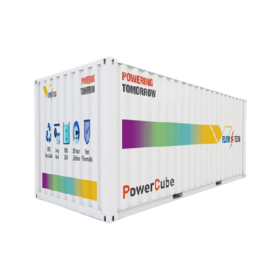
Vanadium redox flow batteries with purported LCOS of $0.10/kWh
Singapore-based VFlowTech has secured funds to scale up manufacturing of its vanadium redox flow batteries. The company currently offers three modular products that can be scaled to multi-megawatt-hour systems.
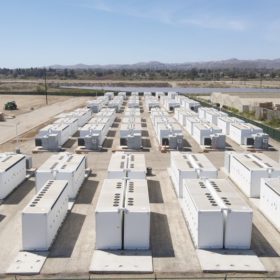
Supply shortages likely to hit utility energy storage as EV demand grows, IHS Markit says
Cell manufacturers are expected to prioritize larger customers in the automotive industry over relatively small energy storage system integrators.
M-Tec launches modular battery with integrated hybrid inverter
The modular battery can be cascaded up to 30.7 kWh of storage capacity. The Energy Butler is a storage kit made up of up to eight modules.
The Hydrogen Stream: Electrolysis tech that can produce hydrogen from virtually any water source including salt water
A Swiss-Canadian consortium is developing a novel process to produce green hydrogen. Furthermore, Italy’s Snam is cooperating with IRENA and a French consortium wants to deploy high-end hydrogen storage systems for the railway sector.

Hybrid fuel cell-battery storage system for solar applications
Scientists in Thailand have built a hybrid system based on a 3 kW fuel cell and a 50 kWh lead-acid battery that is intended for storing solar power. They also sought to identify the best DC coupling voltage between the two devices in order to optimize their combined performance.
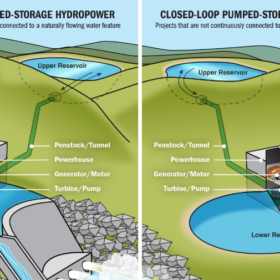
Closed-loop pumped hydro on the rise
Closed-loop pumped-hydro storage offers more chances to minimize environmental effects on water sources and overcomes the problem of finding suitable sites. According to an Australian research team, closed-loop systems could prevail on open-loop systems in the future and this trend is confirmed by another group of scientists from the United States.
