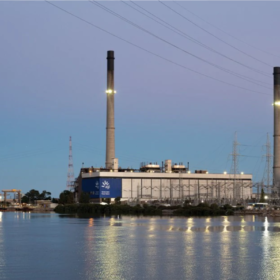
Australian utility develops battery storage
AGL, one of Australia’s biggest polluters, is working toward net-zero emissions by 2050, and aims to use big batteries to replace the spinning reserves of some coal and gas generators.
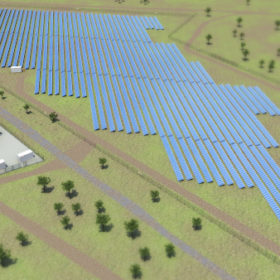
Solar micro-grid with 1 MW/4 MWh of vanadium redox flow storage in South Africa
Spanish renewable energy company Abengoa will deploy a 3.5 MW solar micro-grid at a vanadium mining site operated by Bushveld Minerals in South Africa. The storage system will be provided by Austria-based storage specialist Enerox Holdings Limited.
Senegal to host 30 MW solar park coupled to 15 MW/45 MWh of storage
The $40 million projects will be the country’s first large scale solar-plus-storage project.
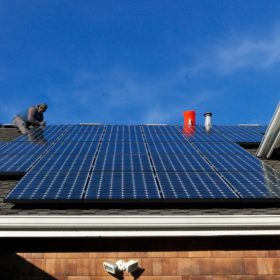
How to minimize grid purchases in storage-integrated PV systems
Scientists in Poland have developed a machine-learning method to help solar+storage system owners manage battery charging and discharging, so they can avoid buying power from the grid.
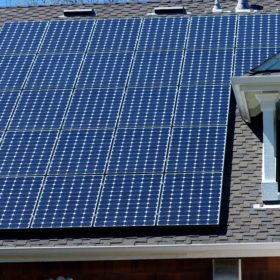
Italy has 170 MW/267 MWh of distributed storage capacity
The country added around 90 MW/100 MWh of new, small-sized storage capacity over the past 18 months. Most of the batteries are in Lombardy, whose administration offers rebates.

Carbon nanotube gives batteries a boost
Scientists in the U.S. examined the use of different conductive filler materials in a lithium-ion battery electrode, finding that adding single walled carbon nanotubes to a nickel-cobalt-manganese cathode resulted in better electrical conductivity and higher rate capability for the overall battery. The results, according to the group, could provide new insights into design of high power, high energy battery electrodes.

European Council reaches €1.82tn budget agreement with parliament
The parliament and EU member states will now mull the proposed budget for 2021-27 which includes a €750 billion Covid recovery package and a Strategic Investment Facility it is hoped will unlock €150 billion for renewables and energy storage to 2027.
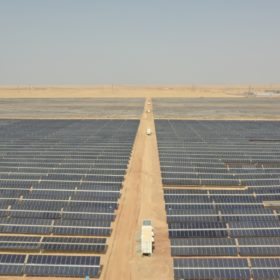
Solar challenges and trends and Covid-19 discussed at 2020 Africa Energy Forum
The 24-day, digital 2020 Africa Energy Forum kicked off on October 20. The event brings together African energy sector officials to identify opportunities, air their views, form partnerships, and take the necessary steps to improve the industry. For solar, challenges in policy making, procurement processes and the effects of the Covid-19 pandemic were discussed, as well as emerging trends such as solar digitalization.
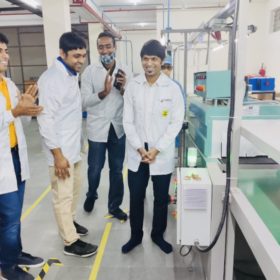
Indian lithium battery factory begins production
Inverted Energy has started manufacturing at its 100 MWh lithium battery assembly facility at Okhla, New Delhi. The plant will initially produce batteries for energy storage systems in the residential and commercial sectors, and for electric-mobility applications. The plan is to eventually cater to critical applications in the telecom and health care sectors.

Dual-ion battery prototype promises safe and cost-competive energy storage
Scientists have fabricated a working battery using a new type of dual-ion chemistry. The design avoids many of the rare or expensive materials found in today’s lithium-ion batteries, and also comes with an inherently lower risk of fire. The battery showed promising performance, and its creators say they have identified several areas where performance could potentially be improved.
