Ofgem’s plan for network charges triggers renewables sector backlash
Ofgem passed its long-awaited, controversial plan for network charges last week, despite earlier warnings against the move. The UK electricity market regulator’s Targeted Charging Review has provoked a backlash in the renewables sector, as many believe that the plan will damage the economics of distributed energy resources and unsubsidized onshore wind and solar development.

Total completes 16 MW/10 MWh solar+storage project in New Caledonia
The project is an extension of the Hélio Boulouparis 1 installation, which was commissioned in May 2017 with 11.2 MW of capacity.

Iberdrola switches on 3 MWh battery in Spain
The project was realized by the i-DE distribution company of the Spanish electric utility. The large scale storage battery is intended to improve the quality of electricity supply with a focus on solar projects located nearby.
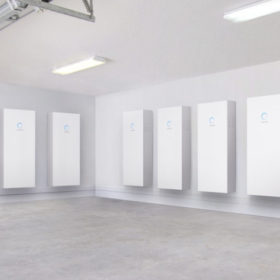
Sonnen household battery owners offered revenue from grid balancing services
The German storage system provider intends to use its ‘Sonnen-Flat’ payment package to help customers benefit from the proceeds of its virtual power plant.
Essent expands into renewables with acquisition of Vandebron
Dutch gas and power provider Essent has agreed to buy the Amsterdam-based renewables marketplace for an undisclosed sum. Vandebron sells electricity aggregated from wind, solar and biomass projects.
Fossil fuel dependence and poor governance? Fasten your seatbelts
A study of the after-effects of the energy transition has assessed 156 nations and ranked a surprising winner. Here, energy expert Indra Overland discusses the findings of the GeGaLo Index as part of our interview examining renewables and geopolitics.

Mounting interest in gravity-based storage solutions
Austrian researchers have proposed gravitational energy storage for locations with low demand. The scientists claim the system they are suggesting can be combined with other forms of storage as well as renewables, costs $50-100 per megawatt-hour of stored energy and $1-2 million per megawatt of installed capacity to develop.
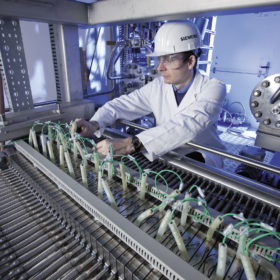
Engie and Air Liquide join forces to develop green hydrogen
A cooperation agreement was signed by the French corporations to launch the HyGreen Provence project, which is expected to produce annually 1300 GWh of solar electricity and 10,440 tons of green hydrogen by 2027.
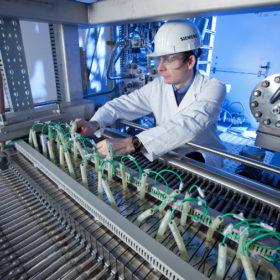
Green hydrogen to reach cost parity by 2030
Recent analysis from Wood Mackenzie predicts green hydrogen, produced primarily by solar electrolysis, will reach cost parity in Australia, Germany and Japan by 2030.
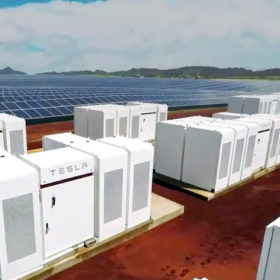
California spies solar-plus-storage domination by 2030, with 11 GW/44 GWh of batteries
The state’s 2019 Integrated Resource Plan foresees just over 11 GW of solar power generation capacity and at least 11 GW – with a possibility of up to 19 GW – of energy storage necessary to meet resource adequacy as part of the state’s legally required 60% renewable portfolio standard by 2030. Prices have halved since 2017.
