
Korean scientists achieve 21% efficiency in polycrystalline solar cell for underwater environments
The cell was fabricated with a 2.3 nm-thin layer of gallium oxide, a silver busbar aimed at improving charge collection and silicon nitride anti-reflection coating. It was encapsulated within a watertight 3D-printed box to ensure impermeability.

Optimum tilt angle for PV systems ranging from 0° to 90°
A Slovak research team has developed a mathematical model for determining the optimum tilt angle of a solar system ranging from 0° to 90°. Their framework was tested on an experimental setup in Czechia and attained 93.9% accuracy in predicting the system’s energy balance.

Brookfield, Solarvest partner on 1.5 GW of solar-plus-storage in Malaysia
The two parties have signed a joint investment framework agreement to develop, construct and operate 1.5 GW worth of solar-plus-storage projects in Malaysia over the next three to five years.

Seven projects pulled from EU hydrogen fund
The projects, equivalent to 1.88 GW of electrolyzer capacity, were withdrawn after choosing not to continue with the agreement procedure or for being unable to provide a signed completion guarantee. As a result, ten hydrogen projects representing 774 MW in capacity from the reserve list have been invited to prepare grant agreements.
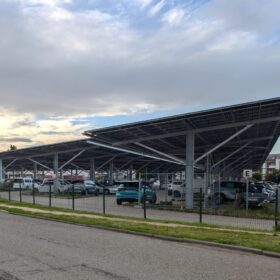
Stochastic optimization for PV-powered EV charging stations
Scientists have developed a new optimization approach that combines both day-ahead optimization and real-time optimization to improve operations of PV-driven EV charging stations. The framework is based on the autoregressive moving average and the Latin hypercube sampling models.
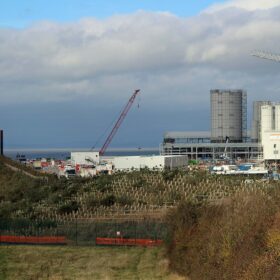
Record nuclear power output in 2024 irrelevant to global energy landscape
Nuclear plants generated a record amount of power in 2024, surpassing record set in 2006, but industry optimism is not backed by economic data or investment, says the World Nuclear Industry Status Report 2025.

‘Progress is happening, but it remains slow’
This week Women in Solar+ Europe gives voice to Maria Gil, Business Development EU at Spain’s Solargrade. She says that real change in the energy industry only comes when companies and institutions move beyond statements and consistently turn policies into sustained action. “As the sector grows and requires more workers, it must bring in talent with equity at its core, ensuring inclusion moves from policy documents into everyday practice,” she states.
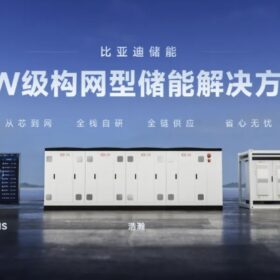
BYD unveils 14.5 MWh storage system, world’s largest yet
China’s EV giant has unveiled the 14.5 MWh DC “Haohan” single-unit DC block with record-breaking capacity to challenge next-generation energy storage market.
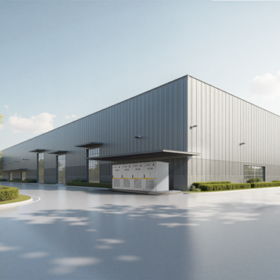
AlphaESS releases liquid-cooled ESS for commercial, industrial use
The Chinese storage manufacturer said its new energy storage system has a capacity of 261 kWh per cabinet. It can be expanded up to 50 units in parallel, scaling to multi-MWh projects.
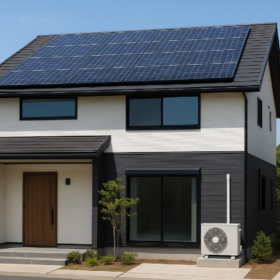
Making the business case for solar-plus-storage with heat-pumps in Japan
A Japanese research team has evaluated the affordability of photovoltaic-battery systems featuring heat-pump water heaters and air conditioning units across nine regions of Japan. They analyzed three price policies and two loan types, identifiying a tradeoff between net demand and cost according to the capacity of the solar-plus-storage system.
