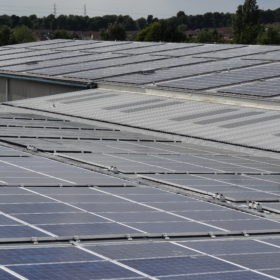
Swedish utilities are competing to buy distributed solar power
Swedish power utilities and electricity traders are increasing their efforts to buy surplus solar power from residential prosumers under fair competition conditions, according to analysts from local consultancy Becquerel Sweden. In a conversation with pv magazine, they analyzed the reasons for this new corporate mentality and observed a possible trend for the global solar market.
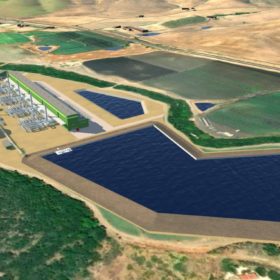
Hydrostor plans 400 MW / 3200 MWh compressed air energy storage in the U.S.
The plant would be able to deliver 400 MW of electricity for 8 hours, and would be comparable in size to some of California’s largest fossil fuel power plants.
The Hydrogen Stream: A fuel cell gigafactory in the US and new plans from Australia
U.S. hydrogen solutions company Plug Power opened, this week, its green hydrogen and fuel cell gigafactory in New York state. In Australia, Patriot Energy announced a supply agreement for 75 modular green hydrogen generation units, and ARENA said it will play a key role in the development and delivery of the German-Australian Hydrogen Innovation and Technology Incubator.

Eni plans IPO for Plenitude, its new ‘energy transition’ unit
The new company will comprise all group’s business for the development of renewable energy, the sale of energy solutions, and the creation of a widespread EV charging network.
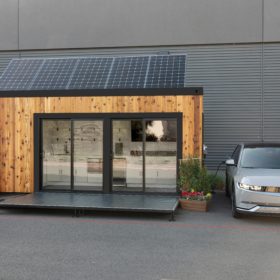
Hyundai creates platform to help homeowners buy solar panels, battery and EV charger
The one-stop marketplace platform will be launched in the US market next year. It will help homeowners find the best combination of products depending on their consumption profile.
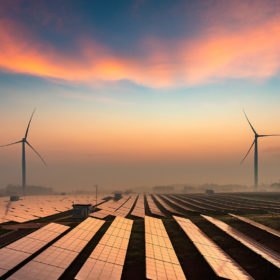
Giant green hydrogen project powered by 6 GW of off-grid solar and wind proposed for South Australia
Kallis Energy Investments is proposing a whopping 6 GW renewable hydrogen project in South Australia, with founder Terry Kallis telling pv magazine Australia the project will not seek to connect its 3 GW of planned solar and wind assets to the already congested grid.
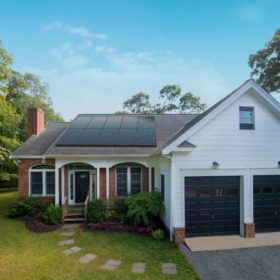
SunPower launches VPP offering for its energy storage customers
The US company will manage charging and discharging the batteries, while keeping some electricity in reserve for backup power to the home.
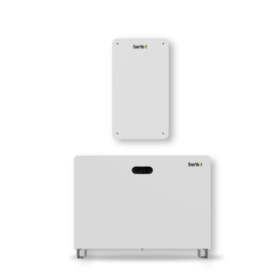
Panasonic launches new Evervolt battery
Panasonic said the system is available in the U.S. with storage capacities of 17.1 kWh and 25.65 kWh. The product comes with a floor-standing battery cabinet and a hybrid smart inverter with 4 MPPTs.
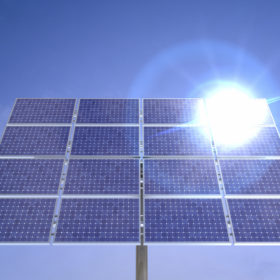
A hybrid wind-solar-biogas sytem design including battery and thermal storage from PV modules’ excess heat
Tested in an off-grid location in India, the proposed approach includes the use of thermal storage from PV modules’ excess heat for space and water heating. The optimum configuration for the system was given by the combination of a 224 kW PV system equipped with a phase change material, a 206 kW wind turbine, a 420 kW biogas generator, a 633 Ah battery, and a 170 kW converter.

Malawi’s first grid scale solar project will shortly be followed by a second
The 20 MW Golomoti PV project will include 10 MWh of lithium-ion battery storage in a first for the sub-Saharan African market, according to its London-based joint developer.
