
EU climate law sets the stage for a green transformation
Although decried for lacking ambition and as an abdication of responsibility in some quarters, the climate law proposed by the European Commission may be more ambitious than it first appears, as Felicia Jackson, from the center for sustainable finance of the School of Oriental and African Studies at the University of London – considers here.

Italian car factory to add 15 MW of solar and 850 charging points
Carmaker Fiat Chrysler is bringing solar power to its Mirafiori manufacturing hub in Turin. A rooftop array will be installed by the auto giant with EDF-owned energy company Edison. French group Engie will install electric vehicle charging points in the car park.
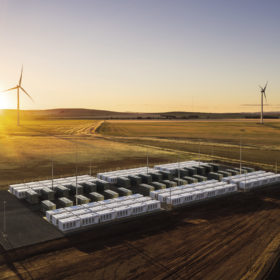
Lake Bonney big battery ready to supply Tesla’s Australian EV charger network
The 25 MW/52 MWh battery at the Lake Bonney wind farm is in the final stages of testing. Once operational, the big Tesla battery will supply the electric carmaker’s Australia EV supercharger network with renewable electricity.
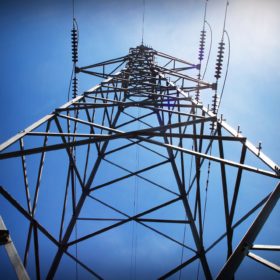
Solar-plus-storage will start to make big inroads in the year ahead
By this time next year we may be able to wave goodbye to that old chestnut about renewables endangering security of supply. Elsewhere, the price of lithium – and the products it goes into – could go either way after tanking this year.
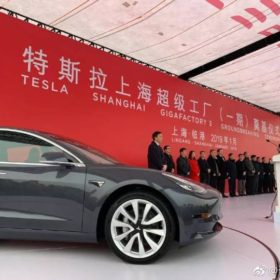
Tesla secures $1.4 billion Shanghai factory loan, hits $420 share price
Tesla finishes 2019 on a high note amid a flurry of year-end EV funding, news and optimism on longer-range electrics.

The year in solar, part I: New modules, flat-pack solar and inverter turbulence
The first part of pv magazine’s review of 2019 considers Q1, when solar early adopter Italy offered an optimistic start to the year by fleshing out its plans for PV but uncertainty still clouded the world’s biggest solar market. The potential for household solar installations to rocket the world over – helped by ever cheaper panels – prompted strategic decisions in the inverter market and analyst expectations were confounded as the cobalt and lithium price plummeted, bringing the EV revolution a big step nearer.
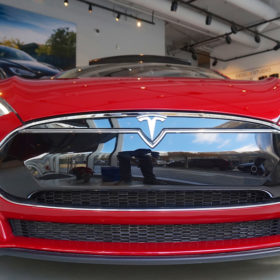
New app helps charge Tesla EVs when electricity is greener and cheaper
With its app already present in Belgium and the Netherlands, start-up Jedlix is introducing smart charging in France. The solution enables Tesla drivers to optimize their charging strategy.

Charging an electric vehicle in 10 minutes
Scientists from Penn State University have developed a self-heating battery for electric vehicles which is said charge in only 10 minutes at 60 degrees Celsius.
Indonesia plans domestic electric vehicle industry
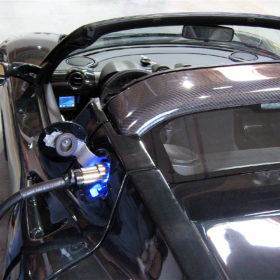
A presidential decree has enacted a range of incentives for e-mobility roll-out with domestic content requirements increasing over time.

Clean energy must be rolled out six times faster
To have any hope of restricting global heating to a maximum of 1.5 degrees Celsius, the renewables success story which saw 108 GW of solar deployed last year needs to be cranked up to the next level – and fast.
