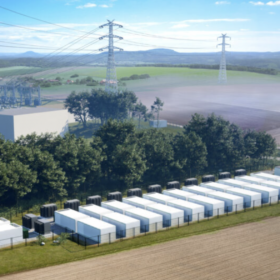
Unlocking untapped storage potential for Germany’s energy transition
Germany’s energy transition is making significant progress. In the first half of 2024, renewables made up 57% of the electricity mix, and this is straining the grid. Battery storage systems and optimized redispatch procedures could help integrate renewables and ease congestion, but challenges remain, says Benedikt Deuchert of Kyon Energy.
Trades against the machine
Large battery storage systems are taking on an increasing number of tasks in the German grid, meaning that the volume and speed of transactions can no longer be managed without computers. As a result, traders are working on algorithms to fully automate transactions.

German PV installations fell to 946 MW in May
The slight growth was mainly due to large commercial and ground-mounted systems. The Federal Network Agency also corrected new installation figures for April upwards from 1,040 to 1,177 MW.

Germany’s January-April solar installations hit 5 GW
Germany added approximately 1 GW of new solar capacity in April and 4.9 GW in the first four months of this year, according to the Federal Network Agency (Bundesnetzagentur). The country’s total PV capacity now stands at 87.6 GW.
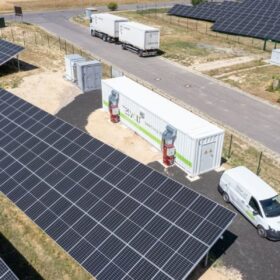
Germany wraps up ‘innovative’ tender with average price of €0.0833/kWh
Germany has concluded a new renewables tender, securing 408 MW of capacity at an average price of €0.0833 ($0.09)/kWh.
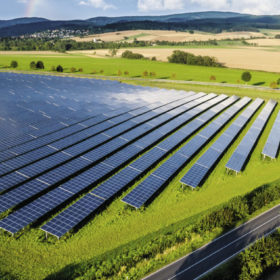
Germany to tender another 1.5 GW of solar power
The German authorities say that the country’s new 1.5 GW tender is a response to the current energy crisis. Selected PV projects will have to reach completion within nine months after securing feed-in premium tariffs.
Germany deployed 434.5 MW of PV in August
The newly installed PV capacity for the first eight months of the year was 3.6 GW, which compares to 3.2 GW in the same period of 2020.
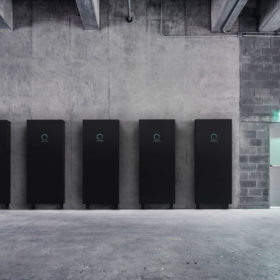
Growing German storage market buoyed by falling prices
RWTH Aachen University and Forschungszentrum Jülich evaluated the data. It shows a growing demand for photovoltaic storage systems in 2019 and continued positive market sentiment lasting well into 2020.
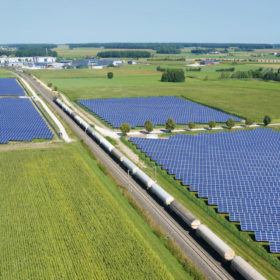
Germany’s special PV tender concludes with average price of €0.0568/kWh
Tariffs ranged from €0.0470 to €0.0620 as the solar power price rose from the last national procurement round, which settled at €0.0459-0.0520 in October for an average €0.0490/kWh. Some 501 MW of generation capacity was allocated in the latest exercise.
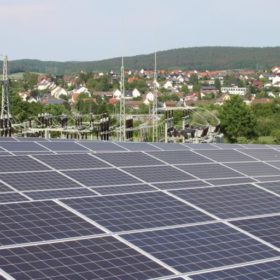
Germany added 2.9 GW of solar in nine months
In September, PV systems with a total generation capacity of 287 MW were registered in the country. The feed-in tariff has fallen again for this quarter as a result of the new capacity additions.
