Indian state launches floating solar tender
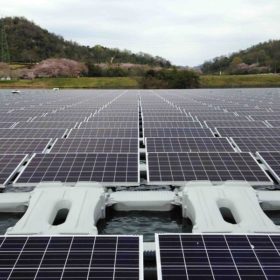
Developers have until September 30 to lodge their interest to install grid-connected floating solar plants on the water reservoir surface at Salaulim, Amthanem, Anjunem, and Chapoli Dams in the Indian state of Goa. Their scope of work also includes assessing the floating solar potential at each of these locations.
Offshore photovoltaics a step closer
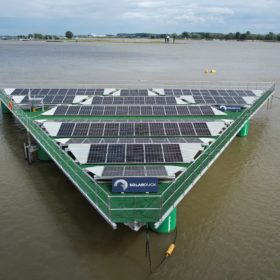
Dutch start-up SolarDuck has secured approval-in-principle for its floating offshore platforms. Its 64 kW pilot project on the inshore water of the Netherlands’ widest river was validated by Bureau Veritas.
NTPC commissions India’s largest floating solar project
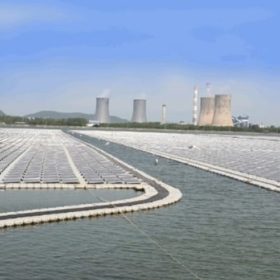
The state-run energy company has commissioned a 25 MW plant on the reservoir at its Simhadri thermal power station, in the state of Andhra Pradesh. The installation features more than 100,000 solar modules.
Combining big floating solar with hydropower
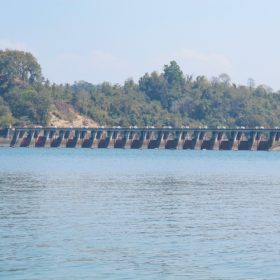
Scientists in Bangladesh have evaluated how a 50 MW floating PV plant could be integrated with the 230 MW Karnafuli Hydroelectric Power Station, located at the Kaptai Dam on the Karnaphuli River. They found that the two energy sources can be perfectly optimized and that PV can compensate for the reservoir’s shortage of water storage during the winter season while hydropower can compensate for the poor yields of the floating array during the monsoon season.
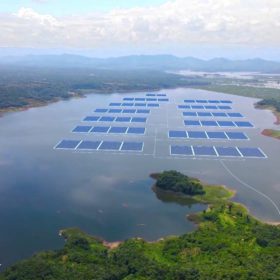
Work begins on 145 MW floating solar plant in Indonesia
South-East Asia’s biggest floating PV installation is under construction by Masdar and Indonesian energy company PT PJB. The two companies secured a PPA for the project with state electricity company Perusahaan Listrik Negara (PLN) in January 2020. The agreed tariff is $0.0581/kWh.

Sunseap announces 2.2 GW floating PV project at Indonesian water reservoir
If built, the project would be the world’s largest floating PV power plant and would reach the same capacity as the largest ground-mounted facility currently in operation.
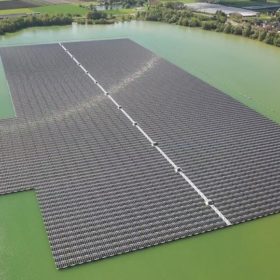
Another 70 MW of floating solar goes online in the Netherlands
BayWa re commissioned two floating PV facilities which it claims are the largest in Europe and outside Asia.

Solar module for floating PV from Hyundai
The bifacial panel has a power output of up to 485 W and an efficiency of up to 21%. It relies on a transparent backsheet and is encapsulated with polyolefin elastomer (POE).

First lessons learnt from offshore pilot PV system in North Sea after 18-month operation
The 50 kW modular PV system started operating at the end of November 2019. According to its developer, Dutch start-up Oceans of Energy, power production after 18 months of operations is in line with expectations. The installation had to withstand several storms and waves with a height of up to 10 meters.

Singapore’s 60 MW floating PV array up and running
Singaporean Prime Minister Lee Hsien Loong said earlier this year that the city-state needs to “innovate and use technology” to overcome its resource scarcity problem. With one of the world’s largest floating PV arrays now in operation, it appears to be drifting in the right direction.
