
IEA-PVPS calls for better data collection on floating PV
A recent report from the International Energy Agency (IEA) Photovoltaic Power Systems Programme (PVPS) says limited long-term data on floating solar is creating uncertainty and hindering adoption.

Testing floating PV at different heights
Scientists have tested the performance of floating PV panels at a height of 800 mm and 250 mm above their floating structures. Their thermal and electrical performance was compared to that of a reference land-based system and the highest panel was found to show the greatest cooling effect.
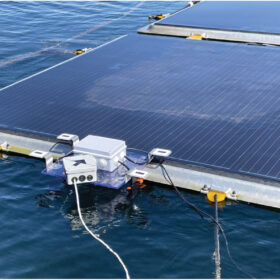
New model to measure wave-induced loss in floating PV
Researchers have developed a three-step technique to estimate power generation loss in floating PV farms resulting from changes in tilt and mismatch losses. The new module was tested in an experimental setup and showed that electricity losses mainly depend both on system design and location.
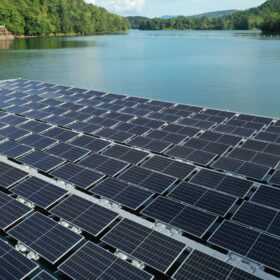
Mibet launches new floaters for PV systems on deep water
Mibet has released new floaters for PV systems deployed in deep water. The G4M system, already installed in Indonesia on a body of water with a depth of 60 meters, allows the solar panels to be tilted at 5 degrees to 15 degrees.

Offshore vs. ground-mounted PV
Researchers in Saudi Arabia have compared the performance of ground-mounted PV plants with that of off-shore solar facilities and have found that floating installations benefit from the cooling effect of the seawater.
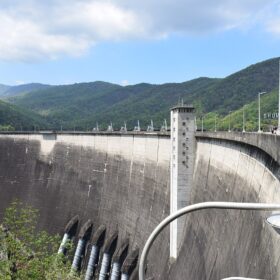
Thailand kicks off tender for 205 MW hydro-floating solar hybrid project
The Electricity Generating Authority of Thailand (EGAT) has launched a tender for a 205 MW hydro-floating solar hybrid project at the 779 MW Bhumibol Dam, the largest arch dam in Southeast Asia.
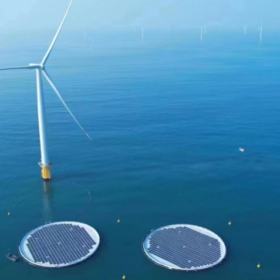
New method to identify best locations for offshore hybrid PV-wind projects
Scientists in Spain have created a new index that reportedly help project developers identify better areas in initial stages of hybrid wind-solar power plants development. The proposed approach is claimed to avoid deficiencies of previous criteria and overestimation caused by time delays.
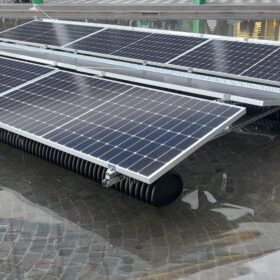
The impact of wind load effects on offshore floating photovoltaics
Researchers have investigated the aerodynamic performance of a single floating PV setup of 16 panels, as well as an array that combined 15 such setups. They found that drag coefficient distributions and wind pressure effects on PV systems vary by inlet angle. They have also identified cost-saving opportunities through material optimization.

Ecuador could host floating PV facilities at 11 hydropower plants
An international team has researched the potential to deploy floating photovoltaics at hydroelectric stations in Ecuador, finding 11 out of 70 sites that could host at least 15 MW up to 200 MW.
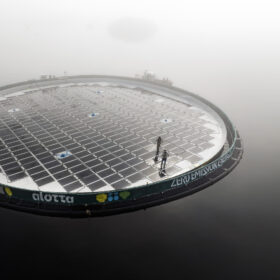
Contract signed for world’s northernmost floating solar plant
The 160 kW floating solar system, from Norwegian renewable energy company Alotta, will be deployed off the Norwegian coast, helping to reduce the diesel and CO2 consumption at a site belonging to a fishing company.
