
Germany’s balcony PV installations hit 200 MW in H1
Germany’s Federal Network Agency (Bundesnetzagentur) says 220,000 balcony PV systems were installed in the country in the first half of the year, reaching 200 MW.
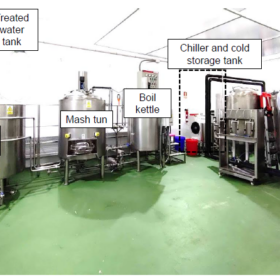
Solar for small-scale brewing
Researchers in Spain have investigated the potential of using photovoltaic (PV) or photovoltaic-thermal (PVT) systems in microbreweries and have found that PVT systems can cover more energy demand but have a longer payback time.

Rooftop PV reduces building retrofitting costs by up to 50%
Cambridge researchers have analyzed the benefits of installing a PV system on the roof of an apartment building in addition to energy refurbishment and have found that photovoltaics, especially if combined with heat pumps, makes retrofit projects more affordable.

German PV installations fell to 946 MW in May
The slight growth was mainly due to large commercial and ground-mounted systems. The Federal Network Agency also corrected new installation figures for April upwards from 1,040 to 1,177 MW.
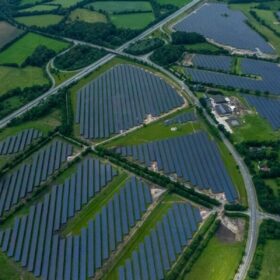
Greentech starts running 103 MW of ground-mounted PV in Germany
Greentech has started operating 103 MW of ground-mounted solar capacity in Germany.

DLR launches solar atlas to identify rooftop PV potential in Germany
The German Aerospace Center (DLR) has created a solar atlas to identify rooftop PV potential in Germany. This new open-access online platform uses aerial photographs and geodata processed with machine-learning methods to determine solar energy potential for the country’s entire building stock of around 20 million units.
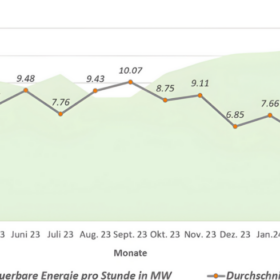
German energy market records 78 hours of negative prices in May
Rabot Charge’s monthly analysis shows significantly more hours with negative prices on the Germany electricity market than in April. However, the average price in daily transactions was €6.72 ($7.32)/kWh – higher than in the previous month.
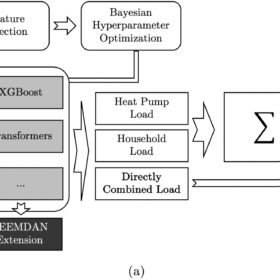
Researchers propose new models for heat pump load forecasting in energy communities
Novel research from Germany and the USA has analyzed the impact of heat pump (HP) integration on the ability of day-ahead load forecasting in energy communities. Using different models, the scientists have also investigated whether HP loads should be forecasted separately from the rest of the household or both together.

Germany’s January-April solar installations hit 5 GW
Germany added approximately 1 GW of new solar capacity in April and 4.9 GW in the first four months of this year, according to the Federal Network Agency (Bundesnetzagentur). The country’s total PV capacity now stands at 87.6 GW.
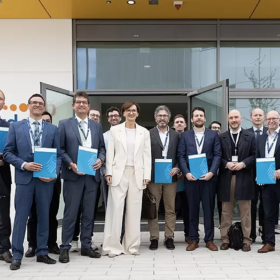
German initiative to develop scalable sodium-ion batteries
A collaborative project led by German battery supplier Varta aims to develop industrial-scale sodium-ion battery technology. The final product of the three-year, €7.5 million ($8.08 million) project will be a small series of round cells for electric vehicles and stationary storage systems.
