
Rodrigues and Curacao have PV lessons for us all
With the world’s islands already experiencing some of the worst effects of climate change, much could be learned from their ability to demonstrate the viability of 100% clean energy systems. Greening the Islands’ Gianni Chiannetta examines the case for two islands in the Caribbean Sea and Indian Ocean.

Local authorities can lead net zero charge
With metropolitan-borough and city councils in England and Wales already driving decarbonization initiatives, local government bodies could do so much more if given adequate powers and funding.

Technology brings universal access to clean energy within sight
The opportunities available from the aggregation and interpretation of mass data are huge and could help attract investors and ensure more efficient electricity networks as the world races to try and achieve the UN goal of access to reliable energy for all this decade.

Huge aluminum demand expected in solar industry, concerns arise on emissions
Researchers from the University of New South Wales (UNSW) predict that growth to 60TW of photovoltaics needed to rapidly reduce emissions to ‘net zero’ and limit global warming to <2 °C could require up to 486 Mt of aluminium by 2050. A key concern for this large aluminium demand is its large global warming potential.
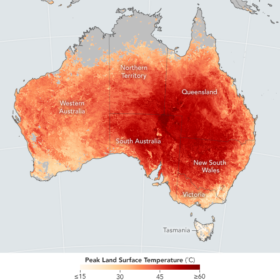
Future climate scenarios to adversely affect Australia’s PV capacity
Australia is blessed with an incredible solar resource, but it will be diminished by global warming.

New Michael Moore film claims environmental leaders ‘sold out to corporate interests’
“As we suffer through one health and environmental crisis after another, it is clear we can no longer simply solar-panel-and-windmill our way out of this emergency,” say producer Michael Moore and author Jeff Gibbs.

Solar and wind offer safest route to decarbonized electricity mix
The mature renewable energies are the most efficient power resources to slow down global warming and reduce human health impacts, according to a new study published in Nature Communications. The authors claim renewable energy generation capacity is also the best way to reduce land use, toxicity and drinking water depletion.

The energy transition is easily affordable but all hope of 1.5C warming will vanish in 2028
Technical consultancy DNV GL has published its Energy Transition Outlook 2019. While the electric vehicle, storage and renewable energy industries are likely to see significant rises in demand, the sobering conclusion is the world will miss carbon reduction targets by a long shot.

Global warming will hit solar panel performance
MIT researchers say climate change could reduce the yield of solar modules. Analysis based on the warming scenarios outlined by the IPCC predicts in some areas the annual energy output of PV systems may fall by up to 50 kWh per kilowatt installed.
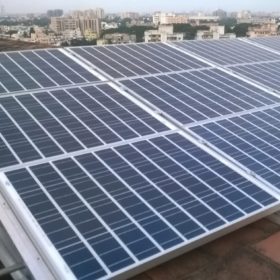
World Bank to support efficient, clean cooling in developing countries
By 2050, energy use for cooling is projected to triple, according to the World Bank. And by 2050, demand for cooling in countries such as India, China, Brazil and Indonesia will grow fivefold, putting pressure on already strained energy systems and hampering efforts to curb climate change.
