
PowerChina wraps up record 102 GW solar equipment procurement tender
China Power Construction Corp. (PowerChina) says it has concluded the largest procurement tender in solar industry history, involving 51 GW of PV modules and 51 GW of inverters. The tender results, published on Nov. 13, set a new record for scale and industry involvement.
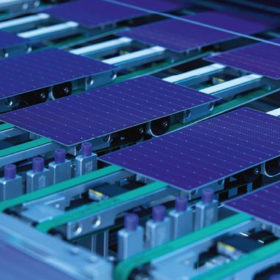
Huasun to supply 1 GW of HJT products to Xinjiang Silk Road, annually
The Chinese company said that, under a new agreement, it will collaborate with Xinjiang Silk Road to produce high-efficiency HJT PV modules. It will supply silicon wafers, cells, modules, and more.

Solving the UV problem of n-type solar
Laboratory testing has revealed that some negatively-doped, “n-type” tunnel oxide passivated contact (TOPCon) and heterojunction (HJT) solar modules are susceptible to ultraviolet (UV) light-related damage and degradation. That could mean trouble down the line, if modules in the field begin to show UV-related performance loss. Manufacturers are implementing solutions at cell and module level.

Will Indian solar manufacturers go back-contact to the future?
Indian PV manufacturers are looking beyond tunnel oxide passivated contact (TOPCon) solar. Back-contact (BC) devices are an enticing prospect but many feel the technology is not mature enough. Uma Gupta considers the cost, yield, and reliability challenges that BC solar has to overcome.

Reliance to commercialize perovskite, back-contact HJT-IBC solar by 2026
Reliance Industries says its new energy business is developing heterojunction (HJT) bifacial solar panels with 26% efficiency, alongside plans to commercialize perovskite and HJT with interdigitated back-contact (IBC) technology within the next two years.
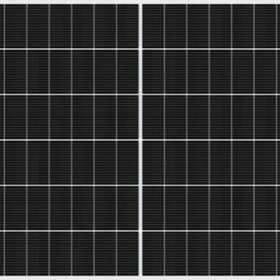
REC launches 640 W heterojunction solar module with 22.5% efficiency
REC has developed a new series of heterojunction solar panels with efficiencies up to 22.5% and an operating temperature coefficient of -0.24% per degree Celsius.

US solar prices double European costs amid regulatory challenges
The requirements of measures such as the Uyghur Forced Labor Prevention Act (UFLPA) mean that solar panel prices in the United States can be twice as much as in Europe.

Weekend Read: Solar giants enter the storage market
Energy storage is the new solar for an increasing number of Chinese PV manufacturers. However, China still requires enabling policies for storage to provide the end-market volumes needed to bolster the fortunes of manufacturers old and new.

Weekend Read: Famine to feast – China’s solar market in 2023
China’s solar industry rebounded in 2023 after years of pandemic-related sluggishness. As the year draws to a close, pv magazine looks back at key highlights of 2023 and considers the prospects for 2024.
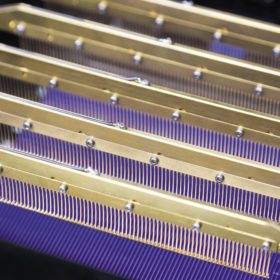
Weekend Read: Connecting HJT
The application of busbarless cell interconnection approaches could unlock the potential of heterojunction (HJT) technology, primarily by reducing the historically high silver usage of negatively-doped, “n-type” cell technology. As HJT manufacturing increases, a wave of applications may very well be on the horizon.
