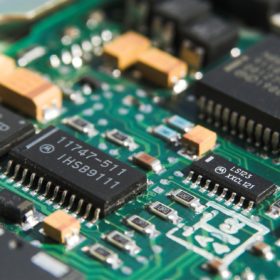
Dutch agency investigates cybersecurity of PV inverters after hack
Radiocommunications Agency Netherlands launched a probe after a hacker gained access to PV systems operated via a monitoring tool from China’s Solarman. A company spokesperson told pv magazine that the problem has since been resolved.
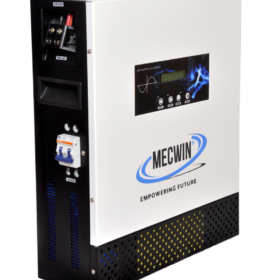
Wall-mountable lithium battery inverter from India
India’s Mecwin has unveiled compact, wall-mountable lithium battery inverters with 1,100 VA and 2,100 VA ratings. The 1,100 VA devices measure 455 mm x 530 mm x 235 mm and weigh 23 kg. The built-in batteries can be charged with grid power and solar electricity.
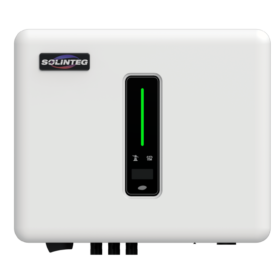
Solinteg launches new residential hybrid inverter series
Solinteg’s new hybrid inverters come in seven versions with nominal power ranging from 3 kW to 9 kW, an efficiency rating of 97.6%, and a European efficiency of 97.0%. They measure 534 mm × 418 mm × 210 mm and weigh 27 kg.

Enphase partners with Home Connect to manage home appliances from single app
Integrated clean home energy and smart appliances platform lets users run appliances on battery-stored solar energy in pre-determined time frames.

Sungrow mulling another new inverter factory outside of China
Sungrow told pv magazine at the recent Intersolar South America event in Sao Paulo that its cumulative delivered capacity in Latin America now stands at 9 GW, with 6 GW of the total delivered to Brazil alone.
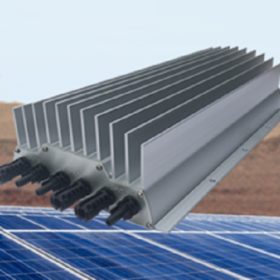
SolarEdge under investigation for alleged patent violations
The US International Trade Commission has launched a new investigation into SolarEdge, following a lawsuit from power electronics specialist Ampt.
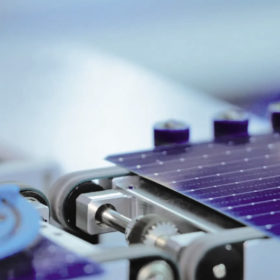
Chinese PV Industry Brief: Mixed financials for module, inverter manufacturers
JinkoSolar has predicted that polysilicon prices will peak before the end of September, while Risen, GoodWe, TBEA, and Ginlong have all reported strong first-half increases in revenue.

Grid-forming inverter to stabilize microgrids
Toshiba has developed a smart synchronous inverter that stabilizes power fluctuations in microgrids. The Japanese company said it has tested the device in combination with PV and battery storage.
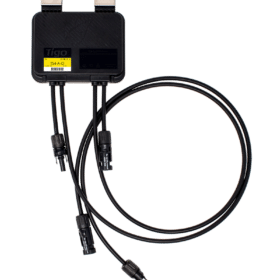
Huge opportunity for module-level power electronics
A new report form analysts at IHS Markit notes that the market for module-level power electronics (MLPE) grew by 33% between 2019 and 2021, with around one-third of new residential solar installations now taking advantage of MLPE’s promise of improved safety, energy yield and fault detection. And with smaller, distributed generation systems expected to represent 43% of global PV installations between now and 2025, the opportunity for MLPE will only get larger.
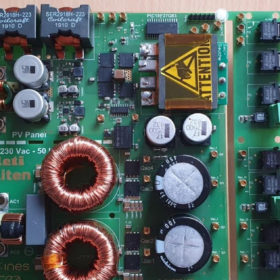
Photovoltaic micro-inverter based on gallium nitride transistors
Scientists from France’s CEA-Ines developed a 400 W micro-inverter with a power density of 1.1 kW/L and an efficiency of 97%. The device utilizes GaN 600V diodes and power transistors developed by CEA’s electronic branch CEA-Leti.
